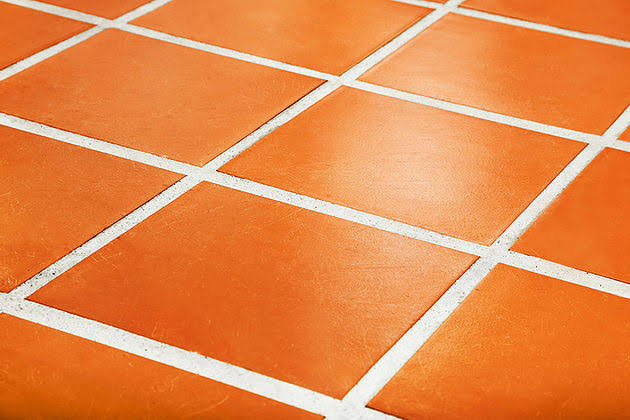
Tile grout Kenya buyers choose can affect the appearance, cleanliness and long-term performance of a tiled surface. The right grout depends on the tile type, joint width, location, moisture exposure, cleaning requirements and available budget.
Grout is sometimes treated as an afterthought. A homeowner may spend considerable time choosing porcelain, ceramic or vitrified tiles, then simply select whichever grout colour is recommended at the counter.
That approach can create problems.
Grout is more than a coloured material filling the gaps between tiles. It contributes to the finished appearance and helps protect tile joints from dirt and moisture. The wrong product, incorrect joint width or poor installation can result in cracking, staining, discolouration or premature deterioration.
The choice becomes particularly important in bathrooms, kitchens, balconies, commercial premises and other areas exposed to water, chemicals, dirt or heavy cleaning.
This guide explains the main types of tile grout, how to choose a colour, how joint width affects selection, where epoxy grout makes sense and when conventional cement-based grout can provide better value.
Tile Grout Kenya: What Is Grout and Why Does It Matter?
Grout is the material used to fill the joints between tiles, creating a finished surface while helping protect the spaces between individual tiles from dirt and debris.
Once tiles are installed, the joints remain visible.
The grout therefore affects:
- Overall appearance.
- Cleaning.
- Joint protection.
- Moisture resistance.
- Maintenance.
- Perceived tile spacing.
A high-quality tile can look poor if the grout is badly mixed, incorrectly applied or poorly matched to the tile.
Similarly, an inexpensive ceramic tile can produce an attractive finish when correctly installed with an appropriate grout.
The grout and tile should therefore be considered as one finishing system.
Tile Grout Kenya: The Main Types of Grout
The main grout categories include cementitious grout and epoxy grout, with different products formulated for different joint widths, moisture conditions and performance requirements.
The two broad categories are:
- Cementitious grout.
- Epoxy grout.
Cementitious grout is commonly used for residential tiling because it is relatively affordable and familiar to installers.
Epoxy grout uses resin and hardener components and generally offers greater resistance to staining, water and chemicals when correctly installed.
There are also specialised grout products with modified formulations and performance characteristics.
The manufacturer’s technical data should always be checked before selecting a specific product.
Tile Grout Kenya: Cementitious Grout
Cementitious grout is a practical choice for many residential tile installations because it is relatively economical, widely available and suitable for many standard wall and floor applications.
It generally consists of cementitious binders, aggregates and other additives.
Depending on the formulation, it may be supplied as:
- Standard cement grout.
- Polymer-modified grout.
- Fine grout.
- Sanded grout.
The correct product depends partly on the joint width.
Cementitious grout is commonly used in:
- Living rooms.
- Bedrooms.
- Kitchens.
- Bathroom walls.
- Suitable bathroom floors.
- General residential applications.
It is particularly attractive when keeping installation costs under control.
Tile Grout Kenya: Epoxy Grout
Epoxy grout is a resin-based grout system that can provide excellent resistance to staining, water and many chemicals, making it particularly useful in demanding environments.
Epoxy grout generally consists of multiple components that must be mixed according to the manufacturer’s instructions.
Its advantages can include:
- Low porosity.
- Strong stain resistance.
- Good chemical resistance.
- High durability.
- Easier cleaning in demanding environments.
- Consistent colour when correctly installed.
However, epoxy grout is usually more expensive than conventional cementitious grout.
It can also require more careful installation because the working time, mixing and cleaning process are different.
Tile Grout Kenya: Is Epoxy Grout Worth the Extra Cost?
Epoxy grout is worth considering when the long-term benefits of stain resistance, low porosity, durability and easier maintenance justify its higher material and installation cost.
It may be particularly useful in:
- Commercial kitchens.
- Restaurants.
- Hospitality spaces.
- Healthcare environments where specified.
- Food-processing areas.
- High-use bathrooms.
- Areas exposed to difficult-to-remove stains.
For a normal bedroom floor, however, epoxy grout may provide more performance than the project actually needs.
The decision should therefore be based on the environment.
Tile Grout Kenya: When Cement Grout Makes More Sense
Cementitious grout can offer better value for ordinary residential applications where extreme chemical or stain resistance is not required.
Consider a typical:
- Bedroom.
- Living room.
- Hallway.
- Interior wall.
- Low-to-moderate traffic floor.
In such locations, a quality cementitious grout can perform effectively when:
- The joint is correctly prepared.
- The grout is mixed properly.
- The joints are filled completely.
- Excess material is cleaned correctly.
- The grout is cured according to instructions.
There is little benefit in paying a premium for epoxy if the application does not require its additional properties.
Tile Grout Kenya: Bathroom Grout Selection
Bathroom grout should be selected with moisture exposure, cleaning frequency, joint width and slip-related maintenance considerations in mind.
Bathrooms experience:
- Water.
- Steam.
- Soap.
- Shampoo.
- Cleaning chemicals.
- Frequent washing.
For bathroom walls, a suitable cementitious grout can be sufficient for many residential applications.
Epoxy grout becomes more attractive where:
- Staining is a major concern.
- Cleaning is frequent.
- Hygiene requirements are higher.
- The installation is heavily used.
However, grout does not replace waterproofing.
A bathroom should have appropriate waterproofing beneath the tiled finish where required.
Tile Grout Kenya: Kitchen Grout Selection
Kitchen grout needs to withstand regular cleaning and exposure to food, grease, water and household cleaning products.
Kitchen backsplashes can experience:
- Cooking oil.
- Tomato-based sauces.
- Coffee.
- Tea.
- Food particles.
- Water splashes.
A good-quality grout can make cleaning easier.
Epoxy grout can be particularly useful in areas where staining is frequent.
For an ordinary residential backsplash, however, a suitable cementitious grout may offer an adequate balance between performance and cost.
Tile Grout Kenya: Floor vs Wall Grout
Floor and wall applications can have different requirements, so the grout should be selected according to the tile installation rather than using one product indiscriminately throughout a building.
Floor grout may experience:
- Foot traffic.
- Dirt.
- Mopping.
- Abrasion.
- Heavy cleaning.
Wall grout generally experiences less mechanical stress.
The location also matters.
A bathroom wall, shower floor, kitchen backsplash and outdoor terrace should not automatically receive the same grout simply because they use similar tiles.
Tile Grout Kenya: Choosing the Correct Joint Width
Joint width affects grout selection because different grout products are designed to perform within specified joint-width ranges.
Tile joints can vary considerably.
Some modern tiles are designed for relatively narrow joints, while rustic or handmade-looking tiles may require wider joints.
The correct joint depends on:
- Tile dimensions.
- Tile edge type.
- Manufacturer’s recommendation.
- Installation environment.
- Movement requirements.
- Desired appearance.
Do not assume that every grout can be used in every joint.
Check the product packaging or technical data sheet.
Tile Grout Kenya: Why Joint Width Matters
A grout joint that is too narrow or too wide for the selected product can affect installation quality and long-term performance.
For example, a fine grout designed for narrow joints may not be appropriate for a large joint.
Similarly, a heavily sanded product may not be suitable for very narrow joints.
Joint width can also influence appearance.
Narrow joints
Create a cleaner, more continuous appearance.
Wider joints
Emphasise individual tiles and can accommodate certain tile types and dimensional variations.
The tile manufacturer and grout manufacturer should both be consulted.
Tile Grout Kenya: Sanded vs Unsanded Grout
Traditional cementitious grouts may be formulated differently depending on joint width, with aggregate size influencing how easily the product fills the joint and how it behaves during installation.
The traditional distinction is often:
- Unsanded or fine grout for narrower joints.
- Sanded grout for wider joints.
However, modern products may have specific formulations that do not fit neatly into this traditional distinction.
Always follow the manufacturer’s specified joint-width range.
Do not select grout based only on whether it looks fine or coarse.
Tile Grout Kenya: Grout Colour Choice
Grout colour can dramatically change how a tiled surface looks, so the best colour depends on whether you want the joints to blend into the tiles or create visible contrast.
Three common approaches are:
Matching grout
Choose a grout close to the tile colour.
This creates a unified appearance.
Contrasting grout
Choose a significantly different colour.
This highlights:
- Tile shapes.
- Patterns.
- Layout.
- Geometric designs.
Neutral grout
Use a neutral shade such as:
- Light grey.
- Medium grey.
- Beige.
- Cream.
Neutral colours can provide a practical balance between visual interest and maintenance.
Tile Grout Kenya: Should You Choose White Grout?
White grout creates a bright, clean appearance but can show dirt and staining more easily than some darker neutral colours.
White grout can work beautifully with:
- White tiles.
- Marble-effect tiles.
- Minimalist bathrooms.
- Light kitchens.
But it may require more maintenance.
In a busy floor, a medium-grey grout may be easier to maintain.
The decision should consider both appearance and cleaning habits.
Tile Grout Kenya: Grey Grout
Grey grout is a popular practical choice because it can provide contrast without the maintenance demands of very light grout.
Light grey can create a soft, contemporary appearance.
Medium grey can:
- Hide everyday dirt.
- Define tile joints.
- Work with many tile colours.
Dark grey can create stronger contrast.
Grey grout can therefore be particularly useful for:
- Kitchens.
- Living rooms.
- Hallways.
- Commercial spaces.
Tile Grout Kenya: Dark Grout
Dark grout can create dramatic contrast and can conceal some everyday dirt, but it may change the visual character of a tiled surface and should be tested before full installation.
For example, black grout with white tiles produces a strong grid effect.
This may look excellent in:
- Contemporary kitchens.
- Feature walls.
- Industrial-style interiors.
But it can make a small room appear more visually segmented.
If you want the tiles themselves to dominate the design, a closer grout colour may work better.
Tile Grout Kenya: Matching Grout With Porcelain Tiles
Matching grout closely to a porcelain tile can reduce the visual emphasis of joints and make large-format floors appear more continuous.
This approach works particularly well with:
- Large-format porcelain.
- Marble-look porcelain.
- Concrete-look tiles.
- Stone-look tiles.
A contrasting grout, on the other hand, emphasises the tile pattern.
Neither option is universally better.
It depends on the desired design.
Tile Grout Kenya: Matching Grout With Ceramic Tiles
Ceramic tiles offer extensive colour and pattern choices, so grout can either complement the tile or deliberately contrast with it.
For patterned ceramic tiles, a neutral grout can prevent the floor or wall from looking overly busy.
For simple plain tiles, a contrasting grout can create visual definition.
Consider taking a tile sample and placing it next to grout samples before making a final decision.
Tile Grout Kenya: Grout Colour and Maintenance
The practical maintenance requirements of a grout colour should be considered before installation, especially in high-traffic or moisture-prone areas.
Very light grout can show:
- Mud.
- Dust.
- Soap residue.
- Food stains.
Very dark grout can sometimes show:
- Mineral deposits.
- Light dust.
- Certain cleaning residues.
Mid-tone neutral colours often provide a practical compromise.
The best colour is therefore not necessarily the most fashionable one.
Tile Grout Kenya: Epoxy vs Cement Grout
Epoxy grout generally provides higher resistance to staining and chemicals, while cementitious grout usually offers lower initial cost and easier handling for standard applications.
| Feature | Cementitious Grout | Epoxy Grout |
|---|---|---|
| Initial cost | Generally lower | Generally higher |
| Stain resistance | Moderate, product-dependent | Generally excellent |
| Water absorption | Higher | Very low |
| Chemical resistance | Limited to moderate | Generally high |
| Cleaning | Relatively straightforward | Can be easier after curing |
| Installation | Familiar to many installers | Requires careful handling |
| Residential use | Very common | Useful in demanding areas |
| Commercial use | Application-dependent | Often valuable |
| Colour options | Wide | Wide |
| Maintenance | May require more care | Generally low-maintenance |
Actual performance varies by manufacturer and product formulation.
Tile Grout Kenya: Does Epoxy Need Sealing?
One advantage of epoxy grout is its low porosity, which generally means it does not require the same type of penetrating sealer routinely used with many cementitious grouts.
Cement-based grout can be more porous.
Depending on the product, sealing may help reduce:
- Staining.
- Water penetration.
- Dirt absorption.
However, not every cementitious grout has identical requirements.
Always follow the manufacturer’s instructions.
Do not apply a sealer simply because it is commonly recommended for another grout product.
Tile Grout Kenya: How to Calculate Grout Quantity
Grout quantity depends on tile size, joint width, joint depth and total tiled area, so the tile box area alone cannot provide an accurate grout estimate.
Two rooms with the same floor area can require different quantities of grout.
For example:
Room A
Large-format tiles with narrow joints.
Room B
Small tiles with wider joints.
Room B can require considerably more grout because it has a much greater total joint length.
The manufacturer’s coverage information is usually the best starting point.
Tile Grout Kenya: Why Small Tiles Use More Grout
Smaller tiles create more joints across the same floor area, which generally increases the amount of grout required.
Consider two floors of identical size.
One uses:
600 × 600 mm tiles
The other uses:
300 × 300 mm tiles
The smaller tiles create more joint lines.
If the joint width and depth are the same, the total volume of grout required will generally be higher.
This is one reason grout quantity should be calculated from the actual tile layout.
Tile Grout Kenya: Grout and Tile Adhesive Work Together
Tile adhesive secures the tile to the substrate while grout fills the joints, so both materials need to be correctly specified for the installation.
Do not confuse their functions.
Adhesive
Connects the tile to the substrate.
Grout
Fills the joints between tiles.
A failure of one can affect the overall installation.
If you are sourcing materials for a tiling project, you can discover our full range of adhesives for suitable project requirements.
Tile Grout Kenya: Surface Preparation Before Grouting
Grouting should begin only after the tile adhesive has sufficiently cured and the joints are ready according to the adhesive manufacturer’s instructions.
Before grouting:
- Remove excess adhesive from joints.
- Ensure joints are clean.
- Check tile alignment.
- Confirm adhesive curing time.
- Prepare the grout correctly.
If adhesive remains in the joints, the finished grout depth may be inconsistent.
That can affect appearance and performance.
Tile Grout Kenya: Mixing Cementitious Grout
Cementitious grout should be mixed according to the manufacturer’s specified water-to-powder ratio because excessive water can weaken the finished grout and affect colour consistency.
Avoid adding water simply to make grout easier to spread.
Too much water can contribute to:
- Shrinkage.
- Colour variation.
- Weakness.
- Increased porosity.
Mix only the quantity that can be applied within the product’s working time.
Tile Grout Kenya: Mixing Epoxy Grout
Epoxy grout requires particularly careful mixing because the resin and hardener must be combined correctly to achieve the intended performance.
Follow the manufacturer’s instructions exactly.
Important considerations include:
- Correct component ratio.
- Thorough mixing.
- Working time.
- Application temperature.
- Cleaning procedure.
- Curing period.
Do not estimate component proportions by eye.
If the product is supplied as pre-measured components, use them as specified.
Tile Grout Kenya: Applying Grout Correctly
Proper application ensures that the joints are fully filled and the finished surface is clean and uniform.
A typical installation involves:
- Preparing the joints.
- Mixing grout.
- Applying it across the tiled surface.
- Working grout into the joints.
- Removing excess material.
- Cleaning the tile surface.
- Allowing the grout to cure.
The exact procedure differs by product.
Epoxy grout, in particular, can require more careful cleaning because cured residue can be difficult to remove.
Tile Grout Kenya: Cleaning After Application
Cleaning immediately and correctly after grouting is essential because residue left on the tile surface can become difficult to remove once it cures.
This is particularly important with epoxy grout.
Do not wait until the following day to clean significant residue unless the product specifically allows it.
Follow the manufacturer’s cleaning procedure.
Use:
- Appropriate sponges.
- Clean water.
- Recommended cleaning solutions.
Avoid improvised chemicals that could damage the tile surface.
Tile Grout Kenya: Preventing Cracked Grout
Cracked grout can result from movement, poor substrate preparation, incorrect joint design, improper mixing or unsuitable grout selection rather than simply from poor-quality grout.
Potential causes include:
- Structural movement.
- Substrate movement.
- Incorrect joint width.
- Excessive water during mixing.
- Poor curing.
- Incorrect installation.
- Lack of movement joints.
Where movement joints are required, they should not simply be filled with rigid grout.
Appropriate movement-joint systems should be used according to the project design.
Tile Grout Kenya: Movement Joints
Movement joints allow tiled surfaces to accommodate dimensional or structural movement and should be incorporated where required by the tile installation design.
Movement may occur because of:
- Temperature changes.
- Building movement.
- Large surface areas.
- Changes in substrate.
- Junctions between different materials.
Do not treat movement joints as ordinary grout joints.
A qualified installer should follow the relevant installation requirements.
Tile Grout Kenya: Outdoor Grouting
Outdoor tile installations require grout and joint systems capable of dealing with weather exposure, movement and water, and the complete installation should be designed for exterior conditions.
Outdoor areas experience:
- Rain.
- Temperature changes.
- Sunlight.
- Dirt.
- Expansion and contraction.
Select tiles, adhesive and grout for the specific outdoor application.
A product suitable for a living room should not automatically be assumed suitable for an exposed terrace.
Tile Grout Kenya: Commercial Applications
Commercial environments can justify higher-performance grout where cleaning frequency, staining, traffic or chemical exposure is significantly greater than in ordinary residential applications.
Consider:
- Hotels.
- Restaurants.
- Shopping centres.
- Offices.
- Healthcare facilities.
- Food preparation areas.
The higher initial cost of epoxy grout can make sense if it reduces maintenance or improves resistance to the conditions.
But product selection should follow the project’s actual requirements.
Tile Grout Kenya: When Epoxy Is Probably Overkill
Epoxy grout can be unnecessary for low-demand areas where a suitable cementitious grout already provides adequate performance at a lower cost.
For example:
A spare bedroom with low foot traffic may not require epoxy.
Likewise, an ordinary interior wall may not justify the additional expense.
The principle is simple:
Buy performance where you need it, not simply because it is the most expensive option.
Tile Grout Kenya: When Epoxy Is a Smart Investment
Epoxy grout becomes more attractive where frequent cleaning, staining, water exposure or chemical resistance creates a measurable long-term benefit.
Good candidates can include:
- Commercial kitchens.
- Restaurant floors.
- High-use shower areas.
- Food-service environments.
- Areas with demanding cleaning regimes.
- Selected hospitality installations.
The decision should be based on lifecycle cost rather than purchase price alone.
Tile Grout Kenya: Grout Colour for Different Rooms
A simple room-by-room colour strategy can make grout selection easier while keeping maintenance and design goals in balance.
| Room | Practical Grout Approach |
|---|---|
| Living room | Matching or medium neutral |
| Bedroom | Matching or light neutral |
| Kitchen backsplash | Matching or contrasting |
| Kitchen floor | Medium neutral |
| Bathroom wall | Matching or light neutral |
| Bathroom floor | Medium neutral |
| Outdoor area | Medium/darker neutral, product-dependent |
| Feature wall | Contrasting grout can emphasise pattern |
These are design guidelines rather than strict rules.
Tile Grout Kenya: A Simple Buying Checklist
Before buying grout, confirm the tile type, joint width, location, colour, coverage and performance requirements.
Use this checklist:
- Tile type.
- Tile size.
- Joint width.
- Joint depth.
- Wall or floor.
- Indoor or outdoor.
- Wet or dry environment.
- Expected traffic.
- Cleaning requirements.
- Desired colour.
- Grout coverage.
- Manufacturer’s application rating.
- Required quantity.
- Installation method.
This checklist can prevent many common mistakes.
Tile Grout Kenya: Frequently Asked Questions
What is the best grout for tiles?
There is no single best grout for every application. Cementitious grout can be excellent for ordinary residential tiling, while epoxy grout is often worthwhile where stain, water and chemical resistance are priorities.
Is epoxy grout better than cement grout?
Epoxy generally provides superior stain and chemical resistance and very low porosity, but it costs more and requires more careful installation.
Is epoxy grout worth the cost?
It can be worth the cost in high-use, heavily cleaned or stain-prone environments. For low-demand residential areas, cementitious grout may provide better value.
What grout colour is easiest to maintain?
Medium neutral shades such as grey can provide a practical balance between appearance and everyday maintenance, although the ideal choice depends on the room and tile.
Should bathroom grout be white?
It can be, particularly for a clean minimalist appearance, but white grout can show dirt and staining more readily than medium or darker neutral colours.
Can I use the same grout for walls and floors?
Sometimes, but only if the product is rated for both applications and the joint width is appropriate.
Does epoxy grout need sealing?
Epoxy grout generally has very low porosity and does not require the same penetrating sealing treatment commonly associated with cementitious grout. Follow the manufacturer’s instructions.
Why does grout crack?
Cracking can result from movement, poor substrate preparation, incorrect mixing, improper curing, unsuitable joints or installation problems.
How wide should tile grout joints be?
The appropriate joint width depends on the tile and manufacturer specification. Do not choose a joint width solely for appearance.
Can I change grout colour later?
Yes, but changing an existing grout colour can require significant cleaning, removal or application work. It is easier to select the right colour before installation.
Does dark grout make a room look smaller?
Strongly contrasting grout can make individual tiles and the grid pattern more noticeable. A matching grout generally creates a more continuous visual appearance.
Which grout is best for a kitchen?
A suitable cementitious grout can work well for many residential kitchens. Epoxy is worth considering where staining, frequent cleaning or chemical exposure is a major concern.
Which grout is best for a shower?
Choose a grout appropriate for the wet-area application and joint width. Epoxy can offer advantages because of its low porosity, but proper waterproofing behind the tile system remains essential.
Tile Grout Kenya: Make the Grout Part of the Tile Specification
Tile grout Kenya buyers should choose based on application, joint width, moisture exposure, maintenance requirements, colour and total project cost rather than treating grout as a last-minute finishing material.
For ordinary residential projects, a quality cementitious grout can provide an effective and economical solution.
For demanding environments, epoxy grout can justify its higher cost through:
- Lower porosity.
- Better stain resistance.
- Strong chemical resistance.
- Easier long-term maintenance.
Colour also deserves careful consideration.
A matching grout can create a seamless appearance, while contrasting grout can emphasise the tile layout. Medium neutral colours can provide a practical compromise for busy areas.
Most importantly, grout performance depends on correct installation.
Use the right product for the joint width, mix it according to the manufacturer’s instructions, prepare the joints properly and allow sufficient curing time.
When the tile, adhesive and grout are selected as a complete system, the finished surface can look better, remain easier to maintain and deliver reliable performance for years.
Your One-Stop Hardware Partner in Ngong
Imagine completing your project with the right tools, the best materials, and expert advice. At Ngong Hills Merchants, we turn your DIY or construction vision into reality with a complete selection of plumbing, electrical, glass, and sanitary ware.
Contact our team for a consultation and get the right supplies, right now.
QUALITY HARDWARE & SUPPLIES IN NGONG ✔ Complete Range of Plumbing & Electrical ✔ Power Tools, Adhesives & Paints ✔ Glass, Framing & Sanitary Ware ✔ Serving Ngong, Karen, Matasia, Kiserian & beyond.
Request Your Free Consultation: Ngong Hills Merchants
Email: ngonghillsmerchants [at] gmail.com
Phone: +254 715974811
Visit Us: Ngong Township, Ngong, Kenya
Website: https://ngonghillsmerchants.com/