Category: Hardware & Construction

  • Roof Flashing Kenya: Ridges, Valleys and Flashings That Stop Roof Leaks

    Roof Flashing Kenya: Ridges, Valleys and Flashings That Stop Roof Leaks

    Roof flashing Kenya details are among the most important parts of a roofing system because they protect the vulnerable joints where different roof surfaces, edges and penetrations meet.

    A roof can have good-quality mabati, tiles or other roofing materials and still develop leaks if its ridges, valleys and flashings are poorly designed or installed.

    The most vulnerable areas are often not the middle of the roof sheets. They are the transitions and junctions: where two roof slopes meet, where the roof changes direction, where sheets terminate, where a roof meets a wall, and where openings or other structures interrupt the roof surface.

    This is why roofing should not be viewed simply as putting sheets over rafters. A reliable roof is a complete water-management system in which the main covering, ridge caps, valleys, flashings, fixings and drainage details work together.

    For Kenyan homes and buildings, these details are particularly important because heavy rainfall can quickly expose weak points. A joint that survives light showers may overflow or allow wind-driven rain into the building during an intense storm.

    Understanding these details helps homeowners, contractors and property managers identify problems before they become expensive repairs.

    Roof Flashing Kenya: Why Roof Details Leak

    Roof details leak when water is allowed to enter joints, travel underneath roofing materials or bypass the intended drainage path.

    Several factors can contribute to roof leakage:

    • Incorrect flashing dimensions.
    • Poorly formed valleys.
    • Inadequate overlaps.
    • Loose fixings.
    • Damaged roofing sheets.
    • Poor ridge installation.
    • Blocked valleys.
    • Incorrect roof pitch.
    • Poorly sealed penetrations.
    • Failed sealants.
    • Wind-driven rain.
    • Poor workmanship.

    A common misconception is that every roof leak originates from a damaged roofing sheet.

    In reality, the sheet itself may be perfectly intact while water enters through an improperly installed ridge cap, valley or flashing.

    Water can also travel some distance beneath roofing materials before appearing inside the building. This means the visible stain on a ceiling is not necessarily directly below the actual point where water entered.

    Ridge Cap Mabati: What Is a Roof Ridge?

    A roof ridge is the highest horizontal or sloping junction where two roof planes meet, while a ridge cap covers this vulnerable connection and helps direct rainwater away from the joint.

    On a typical pitched mabati roof, the two roof slopes rise toward a central ridge.

    Without an appropriate ridge covering, the meeting point between the sheets would remain exposed to rain and wind.

    A ridge cap provides a protective layer over this junction.

    Depending on the roofing system, ridge caps can be manufactured from:

    • Coated steel.
    • Galvanised steel.
    • Aluminium.
    • Other compatible roofing materials.

    The profile should match the roofing system.

    A ridge cap intended for one type of roof profile may not fit another correctly.

    Ridge Cap Mabati: Why Correct Installation Matters

    A ridge cap only performs effectively when it is correctly aligned, adequately overlapped and securely fixed to the roofing system.

    Common installation problems include:

    • Insufficient overlap.
    • Incorrect positioning.
    • Exposed gaps.
    • Poorly aligned sheets.
    • Inadequate fasteners.
    • Damaged coating.
    • Poor sealing where required.

    During heavy rain, wind can drive water toward the ridge.

    If there are gaps beneath the ridge cap, water can enter the roof assembly.

    The ridge should therefore be treated as a functional waterproofing detail rather than a decorative finishing piece.

    Roof Flashing Kenya: What Is Flashing?

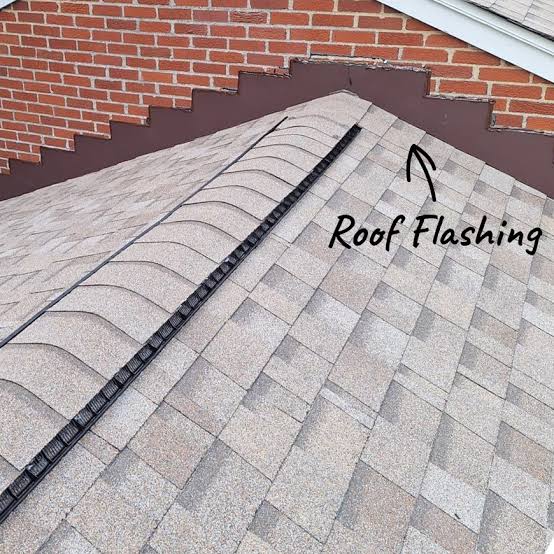
    Roof flashing is a protective component used around roof junctions and vulnerable transitions to guide water away from areas where it could enter the building.

    Flashing may be installed around:

    • Roof-to-wall junctions.
    • Valleys.
    • Chimneys.
    • Parapets.
    • Roof edges.
    • Dormers.
    • Skylights.
    • Other penetrations.

    The exact flashing profile depends on the application.

    A roof-to-wall flashing detail, for example, performs a different function from valley flashing.

    Using a generic piece of metal without considering the joint geometry can result in an unreliable installation.

    Roof Flashing Kenya: Why Flashing Is So Important

    Flashing creates a controlled water path at roof junctions where the primary roofing material alone cannot provide reliable protection.

    Consider a roof where a sloping sheet meets a vertical masonry wall.

    Rainwater naturally runs down the roof.

    When it reaches the wall, it needs to continue safely away from the joint.

    Without suitable flashing, water can enter the gap between the roofing and wall.

    Over time, this can result in:

    • Damp walls.
    • Peeling paint.
    • Ceiling stains.
    • Timber deterioration.
    • Mould growth.
    • Damaged insulation.
    • Structural deterioration in severe cases.

    Good flashing interrupts this pathway and directs water back onto the roof surface or into the intended drainage system.

    Roof Valley Leak: Why Valleys Are Vulnerable

    A roof valley is one of the most important drainage details because it collects water from two intersecting roof slopes and carries that concentrated flow toward the eaves.

    Unlike an ordinary section of roof, a valley receives runoff from two surfaces.

    This creates a concentrated water flow.

    If the valley is poorly designed or installed, water can:

    • Overflow.
    • Back up.
    • Enter beneath the roofing sheets.
    • Accumulate debris.
    • Corrode exposed metal.
    • Damage surrounding roofing materials.

    The valley therefore deserves particular attention during roof design and installation.

    Roof Valley Leak: How a Valley Works

    A properly designed valley creates a continuous, unobstructed route for water flowing from two roof planes toward the drainage point.

    The basic flow is:

    Roof plane → valley → eaves → gutter/downpipe

    The valley flashing or valley tray sits beneath or between the roofing materials, depending on the roofing system.

    Water from both roof slopes enters the valley and flows downward.

    The surrounding roofing should be arranged so that the water remains within the intended drainage channel.

    Anything that obstructs this route increases the risk of overflow.

    Roof Valley Leak: Common Valley Problems

    Most valley leaks are associated with poor geometry, inadequate flashing, debris accumulation, incorrect overlaps or roofing materials that intrude too far into the drainage path.

    Common problems include:

    Narrow valley opening

    If roofing sheets are installed too close together, water may not have sufficient space to flow.

    Incorrect valley slope

    A poorly formed valley can allow water to collect.

    Poor flashing overlap

    Water can enter through joints.

    Exposed fasteners

    Fasteners placed in vulnerable areas can create potential leak points.

    Debris accumulation

    Leaves, mud and other debris can restrict water flow.

    Damaged valley material

    Dents, cuts or corrosion can compromise the drainage channel.

    Incorrect sheet termination

    Roofing sheets that extend too far into the valley can restrict flow.

    Roof Flashing Kenya: Valley Flashing Materials

    Valley flashing should be made from a durable material that is compatible with the roofing system and suitable for the local environmental conditions.

    Possible materials include:

    • Galvanised steel.
    • Pre-painted steel.
    • Aluminium.
    • Other purpose-made roofing metals.

    Material compatibility is important.

    Different metals can behave differently when exposed to moisture, and contact between incompatible metals may contribute to corrosion.

    The coating and finish should also be considered.

    A roofing material supplier or competent roofing professional can recommend a suitable flashing system for the particular roof.

    Ridge Cap Mabati: Types of Ridge Details

    Different roof profiles require different ridge-cap arrangements, so the ridge detail should be selected to match the roofing material and roof geometry.

    For mabati roofs, ridge caps may be designed for:

    • Corrugated sheets.
    • Box-profile sheets.
    • Tile-profile sheets.
    • Other profiled metal roofing.

    A ridge cap may be:

    • Straight.
    • Curved.
    • Profiled.
    • Custom formed.

    The correct profile should sit securely over the roof sheets without creating unnecessary gaps.

    Roof Flashing Kenya: Roof-to-Wall Flashing

    Roof-to-wall junctions are vulnerable because water flowing down the roof can reach a vertical wall and find its way behind poorly installed flashing.

    This detail is common where:

    • An extension meets an existing building.
    • A roof abuts a taller wall.
    • A parapet meets a roof.
    • A lower roof connects to an upper wall.

    A suitable flashing arrangement should overlap the roofing material and protect the junction.

    The wall-side portion should also be properly integrated with the wall construction.

    Simply applying sealant along the visible edge may not provide a durable solution if the underlying flashing geometry is wrong.

    Roof Flashing Kenya: Flashing and Sealants

    Sealants can support a flashing system, but they should not be used as a substitute for correctly designed overlaps, drainage paths and mechanical fixing.

    A common repair mistake is to apply large amounts of sealant over a leaking joint.

    This may temporarily reduce water entry, but sealant can deteriorate due to:

    • UV exposure.
    • Temperature changes.
    • Movement.
    • Moisture.
    • Surface contamination.

    A durable roof detail should rely primarily on correct water-shedding geometry.

    Sealant should be used where appropriate for the roofing system and manufacturer’s recommendations.

    Roof Flashing Kenya: Flashing Overlaps

    Proper overlap is essential because water should always encounter a continuous weather-resistant surface as it moves down the roof.

    Think of flashing like overlapping layers of clothing.

    The upper piece should shed water onto the lower piece rather than allowing water behind the joint.

    Incorrectly oriented overlaps can create a reverse path where water is directed toward the opening.

    The appropriate overlap depends on:

    • Roof pitch.
    • Material.
    • Detail location.
    • Manufacturer specifications.
    • Local weather conditions.

    For critical roof junctions, the installer should follow the roofing system’s technical requirements.

    Ridge Cap Mabati: Ridge Fixings

    Ridge caps require secure fixing because wind forces can act strongly on exposed roof edges and ridge components.

    Fixing methods vary depending on the roofing system.

    The installer should consider:

    • Correct fastener type.
    • Fastener placement.
    • Support beneath the ridge.
    • Washer condition.
    • Fixing spacing.
    • Roof profile.

    Over-tightening fasteners can damage roofing sheets or washers.

    Under-tightening can allow movement and water entry.

    The goal is secure attachment without damaging the roofing material.

    Roof Valley Leak: Fixing Around Valleys

    Valley areas require careful fixing because poorly positioned screws can create direct pathways for water into the roof structure.

    Fasteners should be placed according to the roofing manufacturer’s recommended fixing pattern.

    Avoid placing unnecessary fasteners in areas where water is expected to flow.

    The valley should remain as unobstructed as possible.

    After installation, inspect the entire valley for:

    • Exposed screws.
    • Sharp metal edges.
    • Gaps.
    • Debris.
    • Poor overlaps.
    • Damaged coatings.

    Roof Flashing Kenya: Roof Penetrations

    Any penetration through a roof creates another potential leak point and requires a suitable flashing detail.

    Common roof penetrations include:

    • Plumbing vents.
    • Ventilation pipes.
    • Chimneys.
    • Antennas.
    • Solar equipment.
    • Skylights.
    • Mechanical equipment.

    The flashing must be designed around the penetration so water is directed away from the opening.

    Improvised solutions are often unreliable.

    For example, simply cutting a roofing sheet around a pipe and filling the gaps with sealant can eventually fail if movement occurs.

    Purpose-designed flashing components are preferable where available.

    Roof Flashing Kenya: Chimney Flashing

    Chimney-to-roof junctions require carefully designed flashing because the masonry structure interrupts the normal flow of roof water.

    A chimney flashing system may include multiple components.

    Depending on the design, it can involve:

    • Base flashing.
    • Step flashing.
    • Counterflashing.
    • Apron flashing.

    The exact arrangement depends on the chimney and roof construction.

    The important principle is that water must be directed around the chimney rather than allowed to enter the junction.

    Roof Valley Leak: Debris and Maintenance

    Even a correctly installed valley can develop drainage problems if leaves, mud and other debris are allowed to accumulate.

    Valleys can collect:

    • Leaves.
    • Small branches.
    • Dust.
    • Soil.
    • Roofing debris.

    When debris accumulates, water can be forced sideways or backward.

    This increases the possibility of leakage beneath roofing sheets.

    Inspect roof valleys periodically, especially after storms or before periods of heavy rainfall.

    Cleaning should be done safely.

    Do not walk on roofing sheets or attempt high-level maintenance without suitable access equipment and appropriate precautions.

    Roof Flashing Kenya: How to Inspect a Roof for Leaks

    A roof inspection should focus on vulnerable details rather than looking only for visibly damaged sheets.

    Check:

    1. Ridge caps.
    2. Valley flashing.
    3. Roof-to-wall junctions.
    4. Chimney flashing.
    5. Roof penetrations.
    6. Sheet overlaps.
    7. Fixings.
    8. Gutters.
    9. Downpipes.
    10. Damaged roofing materials.

    Look for:

    • Rust.
    • Gaps.
    • Loose components.
    • Cracked sealant.
    • Lifted sheets.
    • Missing fasteners.
    • Water stains.
    • Damp timber.
    • Blocked valleys.

    An inspection after heavy rainfall can be particularly useful because active problems may be easier to identify.

    Roof Flashing Kenya: Signs of a Failing Ridge

    A damaged or poorly installed ridge may show visible gaps, loose caps, corrosion or water stains around the highest section of the building.

    Warning signs include:

    • Ridge caps moving in strong wind.
    • Visible gaps beneath the cap.
    • Rust around fixings.
    • Loose fasteners.
    • Water stains near the ridge.
    • Damaged roofing sheets.
    • Failed sealant.

    If the ridge cap is loose, simply adding sealant may not solve the problem.

    The underlying fixing arrangement should be inspected.

    Roof Valley Leak: Signs of Valley Failure

    Valley problems often appear as dampness, staining or water entry near the intersection of two roof slopes, although the visible damage may occur away from the actual entry point.

    Look for:

    • Water marks.
    • Damp timber.
    • Rust.
    • Overflow marks.
    • Debris.
    • Damaged flashing.
    • Gaps beneath sheets.
    • Corrosion.

    Because water can travel along roof structures, tracing a leak can require inspection from both the exterior and interior.

    Roof Flashing Kenya: Repair or Replace?

    A minor flashing defect may sometimes be repaired, but widespread corrosion, damaged valley trays or repeated failures may justify replacement of the affected component.

    Repair may be appropriate when:

    • A fastener is loose.
    • A small joint requires correction.
    • Debris is blocking the valley.
    • A component has shifted.

    Replacement may be more appropriate when:

    • Metal has significantly corroded.
    • Flashing is badly deformed.
    • The wrong profile was installed.
    • Repeated leaks continue.
    • The original detail is fundamentally inadequate.

    A roof professional can determine whether the problem is localised or systemic.

    Roof Flashing Kenya: New Roof Installation

    The best time to get ridge, valley and flashing details right is during the initial roof installation, before problems become hidden beneath finishes.

    Before roofing begins, confirm:

    • Roof geometry.
    • Valley locations.
    • Ridge design.
    • Flashing details.
    • Roofing profile.
    • Gutter positions.
    • Downpipe locations.
    • Roof penetrations.

    The roofing team should have a clear understanding of how the different components connect.

    For complicated roof designs, details should be established before materials are ordered.

    Roof Flashing Kenya: Roof Renovation

    Renovating a roof is an opportunity to correct flashing and drainage defects rather than simply replacing visible roofing sheets.

    If an existing roof leaks, inspect the details before deciding what to replace.

    For example, replacing all the mabati may not solve a leak caused by:

    • Incorrect valley flashing.
    • Poor wall flashing.
    • Failed ridge caps.
    • Blocked gutters.
    • Incorrectly positioned fasteners.

    A complete roof assessment can save unnecessary material and labour costs.

    Roof Flashing Kenya: Cost Considerations

    The cost of roof flashing depends on material, roof complexity, dimensions, fabrication, accessories, labour and accessibility.

    A roofing budget should account for more than the main roofing sheets.

    Include:

    • Ridge caps.
    • Valley flashing.
    • Wall flashing.
    • Apron flashing.
    • Step flashing where applicable.
    • Fasteners.
    • Washers.
    • Sealants where required.
    • Gutters.
    • Downpipes.
    • Labour.
    • Access equipment.

    Complex roof designs naturally require more flashing components.

    A simple pitched roof may have a relatively straightforward ridge and eaves arrangement.

    A roof with multiple valleys, extensions, walls and penetrations requires significantly more detailing.

    Roof Flashing Kenya: Why Cheap Flashing Can Be Expensive

    Saving money on critical roof details can create much larger costs if leaks damage ceilings, walls, insulation, timber or interior finishes.

    The cheapest flashing material is not necessarily the best value.

    Consider:

    • Material thickness.
    • Coating quality.
    • Compatibility.
    • Correct profile.
    • Installation quality.
    • Expected service life.

    A small difference in flashing cost can be insignificant compared with the cost of repairing water damage.

    Roofing should therefore be evaluated as a complete system.

    Roof Flashing Kenya: Common Roofing Mistakes

    Many roof leaks can be traced to avoidable installation mistakes involving ridges, valleys, flashings and penetrations.

    Common mistakes include:

    Treating ridge caps as decorative

    The ridge is a critical weatherproofing detail.

    Using the wrong flashing profile

    The component may not sit correctly against the roof.

    Insufficient overlaps

    Water can penetrate joints.

    Over-relying on sealant

    Sealant cannot correct poor geometry.

    Blocking valleys

    Water flow becomes restricted.

    Using inappropriate fasteners

    Fasteners can corrode or fail to seal correctly.

    Ignoring roof pitch

    Certain flashing and roofing details require suitable slopes.

    Poorly detailed roof-to-wall junctions

    Water can enter behind the flashing.

    Failing to inspect penetrations

    Pipes and other openings can become major leak points.

    Roof Flashing Kenya: Best Practices for Contractors

    Good roof detailing starts with planning, accurate measurements, compatible materials and careful installation rather than relying on repairs after the first leak.

    Contractors should:

    1. Study the roof geometry.
    2. Identify all valleys.
    3. Identify roof-to-wall junctions.
    4. Plan ridge details.
    5. Identify roof penetrations.
    6. Select compatible flashing materials.
    7. Follow manufacturer requirements.
    8. Install appropriate overlaps.
    9. Fix components securely.
    10. Inspect before handover.

    Every roof should be checked as a complete drainage system.

    Ridge Cap Mabati: Choosing the Right Accessories

    Ridge caps should match the mabati profile and roof geometry so that the ridge is properly protected without creating unnecessary gaps.

    When purchasing ridge accessories, confirm:

    • Roofing profile.
    • Ridge dimensions.
    • Material.
    • Finish.
    • Fixing requirements.
    • Required length.
    • Number of ridge sections.

    It is useful to purchase compatible components as a system rather than mixing unrelated products.

    Roof Flashing Kenya: Materials and Related Hardware

    A successful roofing installation requires compatible supporting materials and fixings in addition to the main roof sheets and flashings.

    Depending on the project, related hardware may include:

    • Roofing fasteners.
    • Bolts and nuts.
    • Sealants.
    • Adhesives.
    • Power tools.
    • Drill bits.
    • Framing components.

    For general construction requirements, you can browse our bolts and nuts when preparing a project materials list.

    For installation work, you can also learn more about our power tools and explore our drill bits for relevant equipment.

    Roof Flashing Kenya: Protecting the Building After Installation

    Roof maintenance should include periodic inspection of ridges, valleys, flashings, fixings and drainage systems so small defects can be corrected before they become major leaks.

    A practical maintenance routine should check:

    • Ridge caps.
    • Valleys.
    • Flashings.
    • Roofing sheets.
    • Fixings.
    • Gutters.
    • Downpipes.
    • Roof penetrations.

    Remove debris where necessary.

    Check for corrosion.

    Look for displaced components after strong winds.

    Do not wait until interior ceilings are damaged before inspecting the roof.

    Roof Flashing Kenya: Frequently Asked Questions

    What is roof flashing?

    Roof flashing is a protective roofing component installed around vulnerable joints and transitions to direct water away from areas where it could enter the building.

    What is a ridge cap?

    A ridge cap covers the junction where two roof slopes meet and helps prevent rainwater from entering through the roof ridge.

    What is ridge cap mabati?

    Ridge cap mabati refers to a metal ridge-covering component used with mabati roofing systems. The profile should be compatible with the roofing sheets.

    What is a roof valley?

    A roof valley is the intersection between two sloping roof planes where rainwater from both surfaces is collected and directed toward the lower part of the roof.

    Why does a roof valley leak?

    A roof valley can leak because of poor flashing, inadequate overlaps, restricted water flow, debris, damaged material, incorrect installation or unsuitable roof geometry.

    What is the most important part of roof flashing?

    There is no single component that is most important in every roof. Ridge, valley, wall and penetration flashings all need to be correctly designed for their specific locations.

    Can sealant fix a leaking roof valley?

    Sealant may be useful in specific roofing details, but it should not be relied upon to compensate for poor valley design, inadequate overlaps or damaged flashing.

    Why does my roof leak only during heavy rain?

    Heavy rain produces greater water flow, while wind can also drive water into vulnerable joints. An undersized or poorly detailed valley, gutter, ridge or flashing may therefore leak only during intense storms.

    How often should roof valleys be cleaned?

    The frequency depends on the surrounding environment. Roofs beneath trees or in areas where debris accumulates may require more frequent inspection and cleaning.

    Can I replace a ridge cap without replacing the entire roof?

    In some cases, yes. If the roofing sheets are sound and the problem is isolated to the ridge detail, replacing or correcting the ridge components may solve the issue.

    Can roof flashing be installed on an existing roof?

    Yes. Flashing can often be repaired or replaced during roof renovation, although the exact method depends on the existing construction.

    Is metal flashing better than sealant?

    Flashing and sealant perform different functions. Properly formed flashing creates the physical water-shedding detail, while sealants may provide additional sealing where appropriate.

    How can I prevent roof leaks?

    Use suitable roofing materials, correct ridge and valley details, properly installed flashings, compatible fixings, adequate drainage and regular maintenance.

    Roof Flashing Kenya: Get the Details Right Before the Rain Tests Them

    Ridges, valleys and flashings may occupy only a small part of a roof, but they have an outsized role in keeping the building dry.

    The main roofing sheets provide the primary weather barrier, but the vulnerable junctions determine whether that barrier remains effective.

    A reliable roof therefore needs:

    • Correctly installed ridge caps.
    • Properly formed valleys.
    • Suitable roof-to-wall flashings.
    • Correctly detailed penetrations.
    • Secure fixings.
    • Appropriate overlaps.
    • Functional gutters and downpipes.
    • Regular maintenance.

    When planning a new roof or repairing an existing one, do not focus only on the price of the mabati or other main roofing material.

    Ask how the ridges will be finished.

    Ask how valleys will be drained.

    Ask how roof-to-wall junctions will be flashed.

    Ask how penetrations will be sealed.

    Ask where the water will ultimately go.

    These details are what turn a collection of roofing materials into a functioning weatherproof roof.

    For roofing and construction projects requiring related hardware, tools, fixings and other materials, Ngong Hills Merchants can help you identify the products required for your project.

    Your One-Stop Hardware Partner in Ngong

    Imagine completing your project with the right tools, the best materials, and expert advice. At Ngong Hills Merchants, we turn your DIY or construction vision into reality with a complete selection of plumbing, electrical, glass, and sanitary ware.

    Contact our team for a consultation and get the right supplies, right now.

    QUALITY HARDWARE & SUPPLIES IN NGONG ✔ Complete Range of Plumbing & Electrical ✔ Power Tools, Adhesives & Paints ✔ Glass, Framing & Sanitary Ware ✔ Serving Ngong, Karen, Matasia, Kiserian & beyond.

    Request Your Free Consultation: Ngong Hills Merchants
    Email: ngonghillsmerchants [at] gmail.com
    Phone: +254 715974811
    Visit Us: Ngong Township, Ngong, Kenya
    Website: https://ngonghillsmerchants.com/

  • Why Contractors Choose Ngong Hills Merchants for Projects

    Why Contractors Choose Ngong Hills Merchants for Projects

    Modern construction projects depend on more than skilled labour. Contractors also need dependable access to quality materials, suitable tools, practical product advice, and a supplier that understands the pressure of keeping a project moving. For contractors looking for a contractor supply store in Ngong, having a reliable local source can make purchasing and project planning considerably easier.

    A missing fitting, unsuitable tool, poor-quality adhesive, or delayed material can interrupt work and increase labour costs. The right supplier can help contractors reduce these interruptions by providing access to multiple product categories in one place.

    Ngong Hills Merchants serves customers from its Ngong location and maintains product categories covering plumbing, electrical, glass, framing, sanitary ware, paints, adhesives, power tools, drill bits, bolts and nuts, and other hardware requirements. Its online catalogue also shows a broad range of construction and maintenance products.

    For contractors, this breadth matters because construction rarely involves one material category alone.

    A plumbing installation may require pipes, fittings, sealants, tools, and fasteners. A glass installation may require framing and accessories. Electrical work requires appropriate fittings and testing equipment. Finishing work may require paint, adhesives, cleaning products, and tools.

    Having access to several of these requirements through one supplier can simplify procurement and reduce unnecessary movement between stores.

    Why Choose a Contractor Supply Store in Ngong?

    A reliable contractor supply store in Ngong can help professionals access essential materials and tools while reducing procurement delays and unnecessary travel.

    Construction projects operate around deadlines.

    A contractor may have several teams working simultaneously, including:

    • Masons
    • Plumbers
    • Electricians
    • Painters
    • Glaziers
    • Carpenters
    • Tilers
    • Welders
    • General construction workers

    Each team depends on materials arriving when required.

    If the electrician cannot complete an installation because a required fitting is missing, the electrical team may have to stop. If a plumber lacks the correct connection, installation can be delayed. If finishing materials are unavailable, completed structural work may remain unfinished.

    This is why procurement becomes an important part of project management.

    Ngong Hills Merchants’ own guidance on choosing a reliable hardware supplier emphasizes product quality, inventory depth, pricing, staff knowledge, and after-sales support as important considerations when selecting a supplier.

    For a contractor, these factors directly affect productivity.

    A Broad Product Range Simplifies Procurement

    Contractors benefit when one supplier can cover several categories of materials and tools, reducing the need to make multiple purchasing trips for different stages of a project.

    Construction projects often require products from different categories at the same time.

    For example, a residential construction project could require:

    • Plumbing materials
    • Electrical fittings
    • Paint
    • Adhesives
    • Glass
    • Sanitary ware
    • Fasteners
    • Power tools
    • Drill bits
    • Cleaning products

    Ngong Hills Merchants lists these and other categories in its online product catalogue.

    This creates an opportunity for contractors to consolidate purchasing.

    Instead of treating every small requirement as a separate shopping trip, a contractor can prepare a project materials list and source multiple requirements from the same supplier.

    That can help reduce:

    • Travel time
    • Procurement delays
    • Transport expenses
    • Administrative effort
    • Missed materials
    • Unplanned site interruptions

    For busy contractors, time saved during procurement can translate into additional productive hours on site.

    Plumbing Supplies for Active Construction Sites

    Reliable plumbing materials are essential because poorly selected pipes, fittings, or accessories can lead to leaks, rework, and additional labour costs after installation.

    Plumbing work requires compatibility between different components.

    A contractor may need pipes, connectors, valves, plugs, fittings, sealants, and installation tools.

    Choosing the correct product requires consideration of the application rather than simply selecting the cheapest available component.

    Factors can include:

    • Pipe material
    • Pipe diameter
    • Pressure requirements
    • Connection type
    • Temperature
    • Intended use
    • Installation environment

    Contractors can browse the plumbing supplies range when planning plumbing requirements.

    The objective should always be to select materials appropriate to the installation and compatible with the rest of the system.

    A small saving on an unsuitable component can become expensive when labour and reinstallation are considered.

    Electrical Materials Require Careful Selection

    Electrical installations require appropriate products because material quality and compatibility can affect both performance and safety. Contractors should select electrical components according to the requirements of the installation rather than appearance or price alone.

    Electrical work can involve:

    • Switches
    • Sockets
    • Cables
    • Connectors
    • Junction components
    • Testing equipment
    • Conduit-related products
    • Accessories

    A contractor may also require specialized measuring equipment during installation and maintenance.

    Ngong Hills Merchants lists electrical products as one of its major product categories, including equipment such as clamp meters in its catalogue.

    Contractors can browse electrical supplies when sourcing components for suitable projects.

    Electrical installations should always be carried out by appropriately qualified personnel and in accordance with applicable requirements.

    Power Tools Help Contractors Work Efficiently

    The right power tools can reduce manual effort and improve productivity, particularly when contractors are performing repetitive drilling, fastening, cutting, grinding, or installation work.

    Construction sites often require tools that can handle demanding workloads.

    Depending on the trade, contractors may need:

    • Drills
    • Impact tools
    • Grinders
    • Sanders
    • Cutting equipment
    • Rotary tools
    • Accessories
    • Replacement components

    Tool selection should take into account the job, operating conditions, frequency of use, and required performance.

    Contractors can explore the power tools collection when planning their equipment requirements.

    The accessories matter too.

    A drill is only useful if the contractor has the appropriate bit for the material being drilled.

    That is why specialist accessories should be included in the purchasing plan.

    Drill Bits Can Affect Productivity

    Using the correct drill bit for the material can improve drilling performance and help reduce premature tool or accessory wear.

    Construction projects may involve drilling into:

    • Concrete
    • Masonry
    • Metal
    • Timber
    • Tiles
    • Other building materials

    Different materials require different cutting or drilling characteristics.

    A contractor should therefore avoid treating all drill bits as interchangeable.

    For suitable applications, you can browse drill bits when preparing a project tool list.

    Having the correct accessories available before work begins can prevent unnecessary interruptions.

    Fasteners Are Small but Important

    Bolts, nuts, screws, and other fasteners may be relatively inexpensive compared with major construction materials, but they are essential to many assemblies and installations.

    A contractor can have all the major components for a job but still be unable to complete it because a particular fastener is missing.

    Fasteners are used across many trades.

    They can support:

    • Framing
    • Mechanical assemblies
    • Equipment installation
    • Repairs
    • Fixtures
    • Fabrication
    • General construction

    Contractors can browse bolts and nuts when sourcing suitable fastening components.

    The correct fastener should be selected according to the application, material, load, environment, and manufacturer’s specifications.

    Adhesives for Construction and Finishing

    Adhesives are important in many construction and finishing applications, but the correct adhesive depends on the materials being joined and the conditions the bond will experience.

    Modern construction uses adhesives for a wide range of applications.

    These can include:

    • General repairs
    • Installation work
    • Finishing
    • Sealing-related applications
    • Joining compatible materials
    • Maintenance

    Not every adhesive is suitable for every surface.

    The contractor should consider:

    • Surface material
    • Bond strength
    • Moisture exposure
    • Temperature
    • Flexibility
    • Setting time
    • Indoor or outdoor use

    You can discover the available adhesives when preparing your materials list.

    Using the right product can help prevent avoidable failures and rework.

    Glass and Framing for Modern Projects

    Glass has become increasingly important in contemporary construction, while framing provides the support and structure required for many glazed installations. Contractors therefore need access to both glass-related products and compatible accessories.

    Glass can be used for:

    • Windows
    • Doors
    • Partitions
    • Shopfronts
    • Interior features
    • Decorative applications

    Framing is equally important.

    Poorly selected or incorrectly installed framing can affect alignment, stability, weather resistance, and the finished appearance.

    Ngong Hills Merchants lists both glass and framing categories in its product catalogue.

    Contractors can explore the glass range and browse framing products according to project requirements.

    For supporting components, glass accessories can also form part of the procurement list.

    Sanitary Ware for Residential and Commercial Projects

    Bathrooms and washrooms require coordinated sanitary ware and plumbing components, making it useful for contractors to source these requirements alongside related installation materials.

    Residential construction may require:

    • Toilets
    • Basins
    • Sinks
    • Showers
    • Bathroom accessories
    • Related fittings

    Commercial developments may require larger quantities because of multiple bathrooms or washroom facilities.

    The contractor must consider dimensions, compatibility, installation method, water connections, drainage, appearance, and intended use.

    Ngong Hills Merchants provides a dedicated sanitary ware collection for customers planning these installations.

    Buying related materials together can also help contractors identify compatibility issues before products reach the site.

    Paint and Finishing Materials

    Finishing materials have a major influence on the appearance and protection of a completed building, making paint selection an important part of the final construction stage.

    Paint does more than add colour.

    Depending on the product and application, coatings can help protect surfaces from environmental exposure and everyday wear.

    Contractors should consider:

    • Surface type
    • Interior or exterior application
    • Existing coating
    • Preparation requirements
    • Desired finish
    • Coverage
    • Drying conditions
    • Environmental exposure

    You can explore paints and finishing products when preparing a project’s finishing schedule.

    Proper surface preparation remains essential.

    Even an excellent coating can perform poorly when applied over an unsuitable or inadequately prepared surface.

    Cleaning Supplies Matter During Handover

    Cleaning is often the final step between construction and client handover, and appropriate cleaning products can help contractors present completed spaces professionally.

    Construction can leave behind:

    • Dust
    • Adhesive residue
    • Paint marks
    • Cement residue
    • Packaging
    • Dirt
    • Installation debris

    A proper cleaning process helps reveal the quality of the finished work.

    It can also help contractors identify defects before the client does.

    Ngong Hills Merchants provides cleaning items as part of its wider product selection.

    For contractors, including cleaning supplies in the project procurement plan can help avoid a last-minute scramble before handover.

    What Contractors Need From a Contractor Supply Store in Ngong

    The right contractor supply store in Ngong should offer more than products; contractors need dependable stock, practical product guidance, quality materials, and convenient access.

    Construction materials are rarely completely interchangeable.

    Two products may appear similar but have different:

    • Dimensions
    • Strength characteristics
    • Compatibility
    • Applications
    • Installation requirements
    • Durability
    • Finishes

    A knowledgeable supplier can help the contractor ask the right questions before purchasing.

    For example:

    “Which fitting matches this pipe?”

    “Which drill bit is suitable for this surface?”

    “Which adhesive is appropriate for these materials?”

    “What frame works with this glass application?”

    These questions can prevent mistakes before they reach the site.

    Ngong Hills Merchants states that it provides project consultation and guidance as part of its customer support approach.

    Stock Availability Can Keep Projects Moving

    For contractors, product availability is closely connected to productivity because a missing material can stop an otherwise active work team.

    Imagine a contractor has five workers ready to complete an installation.

    Everything is prepared except one essential fitting.

    The labour is already being paid.

    The site is already mobilized.

    But the task cannot be completed.

    The contractor now has to leave the site, search for the missing component, purchase it, and return.

    That single missing item can consume hours.

    For larger projects, repeated procurement interruptions can become significant.

    This is why contractors value suppliers with broad inventory and dependable sourcing.

    Ngong Hills Merchants’ published guidance specifically identifies inventory depth and the ability to source required products as important characteristics of a reliable hardware supplier.

    One Supplier Can Simplify Project Planning

    Consolidating purchasing with a capable supplier can simplify project administration by reducing the number of vendors, invoices, collection trips, and product checks required.

    Consider a contractor managing a renovation.

    Instead of purchasing:

    • Electrical supplies from one shop
    • Plumbing from another
    • Adhesives from another
    • Tools from another
    • Glass accessories elsewhere

    the contractor can investigate whether multiple requirements can be sourced through one supplier.

    This can simplify:

    • Purchasing
    • Record keeping
    • Communication
    • Transport
    • Stock planning
    • Reordering

    It does not mean every product must always come from one supplier.

    Specialized materials may require specialist suppliers.

    But where a supplier can meet several requirements without compromising quality, consolidation can be efficient.

    Contractors Need Value, Not Just Low Prices

    The best construction supplier is not necessarily the one offering the lowest individual price; contractors should consider quality, durability, availability, service, and total project cost.

    A cheap component can become expensive if it fails prematurely.

    The contractor may then have to pay for:

    • Replacement materials
    • Additional labour
    • Transport
    • Removal
    • Reinstallation
    • Client complaints
    • Project delays

    This is particularly important for products that are difficult to replace after installation.

    A slightly higher-quality material may deliver better value if it performs reliably.

    The goal should therefore be value for money rather than simply the lowest purchase price.

    Bulk Purchasing Can Help Larger Projects

    Large projects often require repeated quantities of the same materials, making planned procurement and bulk purchasing useful for contractors managing substantial workloads.

    Before placing a large order, contractors should establish:

    • Exact quantities
    • Product specifications
    • Required delivery schedule
    • Storage capacity
    • Installation sequence
    • Potential wastage
    • Future requirements

    This reduces the risk of buying too much or too little.

    It also allows the contractor to plan cash flow more effectively.

    Where multiple phases of construction are involved, materials can be scheduled according to the project programme.

    The Importance of Reliable Project Communication

    Clear communication between contractors and suppliers helps reduce misunderstandings about product specifications, quantities, timing, and availability.

    A contractor should communicate clearly.

    Instead of saying:

    “I need some pipe.”

    provide details such as:

    • Pipe type
    • Diameter
    • Length
    • Quantity
    • Intended application

    Similarly, when ordering electrical components, specify the required type and quantity.

    For tools, specify the task and material.

    Clear information makes it easier for the supplier to provide an appropriate product.

    It also reduces the risk of incorrect orders.

    Tools Should Match the Trade

    Professional contractors can improve productivity by selecting tools according to the work being performed rather than purchasing equipment based purely on power or brand recognition.

    A plumber may need different tools from a glazier.

    An electrician has different requirements from a painter.

    A general contractor may require a broader collection.

    The tool should match:

    • Material
    • Frequency of use
    • Work environment
    • Required precision
    • Duration of operation
    • Safety requirements

    Contractors should also maintain tools properly.

    A high-quality tool that is neglected can perform poorly.

    Likewise, the correct tool used incorrectly can create safety and quality problems.

    Reliable Fasteners and Fittings Reduce Rework

    Small components can have a disproportionate impact on construction quality because they often connect, secure, seal, or support larger assemblies.

    A poor fitting can create a leak.

    An unsuitable fastener can weaken an assembly.

    A poor-quality accessory can affect the operation of a door or window.

    A wrong electrical component can compromise an installation.

    Contractors therefore need to take small components seriously.

    Good procurement means checking specifications across the entire system rather than focusing only on the largest visible materials.

    Supporting Contractors From Foundation to Finish

    The most useful construction suppliers are those capable of supporting multiple stages of a project, from installation and structural work to finishing and final maintenance.

    A building project can change dramatically as it progresses.

    Early stages may require:

    • Tools
    • Fasteners
    • Plumbing components
    • Electrical materials

    Later stages may require:

    • Glass
    • Sanitary ware
    • Paint
    • Adhesives
    • Cleaning supplies

    A contractor who has already established a relationship with a dependable supplier can simplify these transitions.

    Instead of searching for a new supplier at every stage, they can return to a familiar source.

    That familiarity can make repeat purchasing more straightforward.

    Why Local Access Matters in Ngong

    For contractors working around Ngong, having a local supplier can reduce the time and transport involved in sourcing commonly required construction and maintenance products.

    Construction sites are frequently located away from major commercial centres.

    A contractor working in Ngong, Karen, Matasia, Kiserian, or nearby areas may benefit from having a supplier within the local area.

    Ngong Hills Merchants is listed in Ngong, Kenya, with current business information showing its location in Ngong and operating hours for Monday through Saturday. Ngong Hills Merchants

    The company’s published website also identifies its location as Ngong Township, Ngong, Kenya.

    Local access can be especially useful when an unexpected requirement emerges during an active project.

    Contractors Can Plan Better With a Materials List

    A detailed materials list makes it easier to compare requirements, identify missing components, estimate costs, and organize purchasing before workers begin installation.

    A good list should include:

    Category Information to Record
    Plumbing Type, size, quantity and application
    Electrical Component type, rating and quantity
    Glass Type, thickness, dimensions and quantity
    Framing Profile, dimensions and finish
    Fasteners Type, size and quantity
    Tools Tool type and required accessories
    Paint Surface, finish and estimated quantity
    Adhesives Application and compatible materials
    Sanitary ware Model, dimensions and fittings
    Cleaning Required products and quantities

    This approach gives the contractor a clearer purchasing picture.

    It also makes it easier to identify whether a supplier can cover most of the project requirements.

    Quality Control Starts Before Installation

    Contractors should inspect materials before they are installed because identifying damaged, incorrect, or unsuitable products early is easier than discovering problems after installation.

    When materials arrive, check:

    • Quantity
    • Dimensions
    • Visible damage
    • Product type
    • Packaging
    • Accessories
    • Model or specification
    • General condition

    For glass, inspect for visible damage before installation.

    For plumbing products, verify sizes and connections.

    For electrical components, confirm specifications.

    For tools, inspect condition and accessories.

    Early inspection helps prevent defective or incorrect materials from reaching the installation stage.

    Building Long-Term Supplier Relationships

    A dependable relationship between a contractor and supplier can make future projects easier by creating familiarity with purchasing requirements, commonly used products, and project schedules.

    Contractors frequently work on multiple projects.

    Once a supplier understands their common requirements, repeat procurement can become more efficient.

    The contractor also learns which products are available and where to source them.

    The supplier learns the contractor’s preferred specifications and purchasing patterns.

    Over time, this can create a more efficient working relationship.

    However, the relationship should continue to be based on quality, transparency, and professional service.

    Why Contractors Return to Trusted Suppliers

    Contractors tend to value suppliers that consistently deliver appropriate products, communicate clearly, and help them solve procurement problems rather than simply processing transactions.

    Reliability becomes especially important when a project is under pressure.

    A contractor may suddenly discover:

    • A missing component
    • A damaged item
    • An unexpected measurement
    • A change in specification
    • An additional material requirement

    A supplier that can help identify an appropriate solution becomes more valuable than one that simply sells products.

    That is the difference between a transaction and a working supplier relationship.

    Final Thoughts

    Contractors choose dependable suppliers because construction success depends on more than workmanship; it also depends on having the right materials and tools available at the right time.

    For contractors looking for a contractor supply store in Ngong, Ngong Hills Merchants offers a broad product mix covering plumbing, electrical, glass, framing, sanitary ware, paints, adhesives, power tools, drill bits, fasteners, cleaning items, and other hardware categories.

    Its published resources also emphasize quality products, inventory availability, product knowledge, pricing, and customer support as important factors for contractors choosing a reliable hardware partner.

    For a contractor, the value of a supplier is ultimately measured by how well that supplier supports the project.

    Can you find the materials you need?

    Are the products appropriate for their intended applications?

    Can you get advice when specifications are unclear?

    Can you source tools and accessories alongside materials?

    Can you reduce unnecessary purchasing trips?

    Can you plan your procurement with greater confidence?

    These are the questions that matter when choosing a construction supplier.

    Ngong Hills Merchants’ broad product range makes it possible for contractors to investigate multiple project requirements through one local supplier, from plumbing and electrical work through glass, framing, tools, sanitary ware, painting, and finishing.

    The result is a more organized approach to construction procurement.

    For contractors in Ngong and surrounding areas, choosing a supplier should therefore be about more than finding the cheapest item.

    It should be about finding a dependable project partner that combines product choice, practical support, quality, availability, and convenience.

    Your One-Stop Hardware Partner in Ngong

    Imagine completing your project with the right tools, the best materials, and expert advice. At Ngong Hills Merchants, we turn your DIY or construction vision into reality with a complete selection of plumbing, electrical, glass, and sanitary ware.

    Contact our team for a consultation and get the right supplies, right now.

    QUALITY HARDWARE & SUPPLIES IN NGONG ✔ Complete Range of Plumbing & Electrical ✔ Power Tools, Adhesives & Paints ✔ Glass, Framing & Sanitary Ware ✔ Serving Kiserian, Ongata Rongai, Ngong Hills & beyond.

     Request Your Free Consultation: Ngong Hills Merchants
    Email: ngonghillsmerchants [at] gmail.com
    Phone: +254 715974811
     Visit Us: Ngong Township, Ngong, Kenya
    Website: https://ngonghillsmerchants.com/

  • The Future of E-Commerce in the Hardware Suppliers Kenya Sector

    The Future of E-Commerce in the Hardware Suppliers Kenya Sector

    The Future of E-Commerce in the Hardware Suppliers Kenya Sector

    The construction industry in Kenya is experiencing a significant digital transformation. The way customers search for, compare, and purchase building materials is changing rapidly as technology becomes more integrated into everyday business operations. Traditionally, homeowners, contractors, developers, and businesses depended on physical visits to hardware shops to find tools, plumbing materials, electrical components, and construction supplies. Today, the growth of online shopping is reshaping the role of Hardware Suppliers Kenya, creating a more convenient and efficient way to access essential products.

    Modern customers no longer want only a physical store filled with products. They want a supplier who can provide product information, professional guidance, reliable availability, and convenient purchasing options. Whether someone is building a new home, renovating an existing property, or managing a commercial construction project, access to dependable suppliers has become a critical part of successful project planning.

    E-commerce has introduced a new approach where customers can research products, compare options, and communicate with suppliers before making purchasing decisions. This digital shift is not replacing traditional hardware businesses; instead, it is strengthening the relationship between customers and suppliers by combining online convenience with professional expertise.

    Ngong Hills Merchants represents this new generation of Hardware Suppliers Kenya by bringing together industry experience, quality products, and improved customer accessibility. Through its online presence and wide product range, the company helps homeowners, contractors, and businesses source reliable construction materials while receiving the support needed to make informed decisions.

    The future of hardware retail will belong to suppliers who understand both sides of the industry: the importance of trusted physical service and the growing demand for digital convenience.


    How Hardware Suppliers Kenya Are Adapting to E-Commerce

    For many years, purchasing construction materials followed a traditional process. Customers visited several hardware shops, checked available products, negotiated prices, and relied heavily on recommendations from shop attendants. While this approach remains valuable, it can be time-consuming, especially for contractors managing multiple projects.

    The emergence of e-commerce is changing how customers interact with Hardware Suppliers Kenya. Digital platforms allow buyers to explore product categories, understand specifications, and contact suppliers without unnecessary delays.

    A modern online Hardware Suppliers Kenya platform allows customers to:

    • Browse products before visiting a store
    • Compare different materials and tools
    • Request professional advice
    • Plan purchases more efficiently
    • Access a wider range of construction solutions

    For contractors, this creates better project management. Instead of spending hours searching for materials, they can identify their requirements early and work with suppliers who understand their needs.

    For homeowners, online access reduces uncertainty. Renovation projects often involve selecting unfamiliar products, and digital platforms provide an opportunity to research before investing.

    Ngong Hills Merchants supports this improved buying experience by providing customers access to a wide range of products through its online hardware shop, making it easier to explore construction solutions from one trusted supplier.


    Why Customers Prefer Reliable Hardware Suppliers Kenya

    Trust is one of the most important factors when choosing a construction supplier. Building materials are long-term investments, and poor-quality products can affect safety, durability, and overall project costs.

    Reliable Hardware Suppliers Kenya provide more than products. They provide confidence.

    Customers look for suppliers who offer:

    Quality-Assured Products

    Construction projects require materials that can withstand demanding conditions. Whether purchasing plumbing fittings, electrical accessories, tools, adhesives, or finishing products, customers need assurance that products meet expected quality standards.

    A professional supplier focuses on sourcing dependable products and helping customers choose suitable options based on their specific applications.

    Expert Product Guidance

    Unlike ordinary retail products, construction materials often require technical understanding. Customers may need assistance selecting compatible products or determining the correct specifications for their projects.

    Experienced suppliers help bridge this knowledge gap by providing practical recommendations.

    For example, selecting electrical materials requires understanding safety requirements, load capacity, and proper installation methods. Customers looking for dependable electrical solutions can explore the available electrical supplies and fittings offered by Ngong Hills Merchants.

    Convenient Access and Customer Support

    The best Hardware Suppliers Kenya combine product availability with responsive customer service. Customers should be able to ask questions, receive recommendations, and get assistance throughout their purchasing journey.

    Digital communication has made this process easier by allowing customers to connect with suppliers quickly.

    The Growth of Online Hardware Store Kenya Solutions

    The rise of online shopping has created new opportunities for hardware businesses. Customers increasingly expect suppliers to provide digital access alongside traditional services.

    An online Hardware Suppliers Kenya allows businesses to showcase products beyond the limitations of physical shelf space. Instead of displaying only selected items, suppliers can present a wider catalogue covering different construction categories.

    This is especially important in hardware because customers often require specialised products that may not be immediately visible in a physical shop.

    Through digital platforms, customers can explore:

    • Plumbing products
    • Electrical components
    • Hand tools
    • Power tools
    • Building accessories
    • Glass solutions
    • Sanitary ware
    • Finishing materials

    This expanded access improves convenience while helping customers make better purchasing decisions.

    Ngong Hills Merchants continues to develop a customer-focused approach by combining digital accessibility with industry knowledge. Customers can learn more about the company’s experience and commitment through the Ngong Hills Merchants company information page.

    QUALITY HARDWARE & SUPPLIES IN NGONG
     Complete Range of Plumbing & Electrical
     Power Tools, Adhesives & Paints
     Glass, Framing & Sanitary Ware
     Serving Ngong, Karen, Matasia, Kiserian & beyond.

    Request Your Free Consultation: Ngong Hills Merchants
    Email: ngonghillsmerchants [at] gmail.com
    Phone: +254 715974811
    Visit Us: Ngong Township, Ngong, Kenya
    Website: https://ngonghillsmerchants.com/