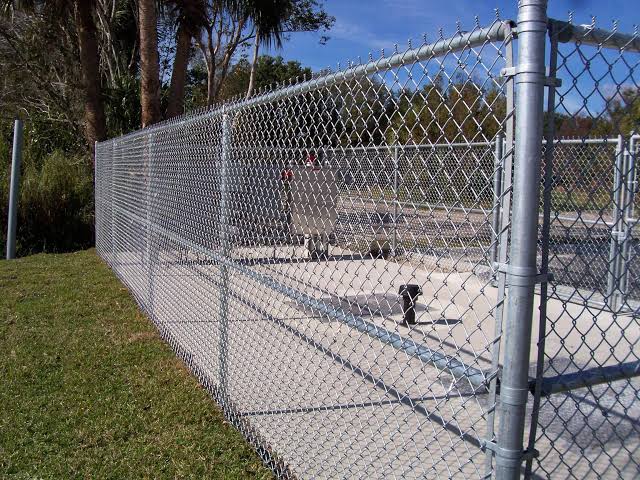
A chain link fence Kenya project needs more than rolls of mesh: the wire gauge, mesh size, posts, concrete, tensioning hardware, gates and security additions all affect the strength and service life of the finished boundary.
Chain link fencing remains one of the most practical ways to secure and define a property. It is widely used around homes, schools, farms, commercial properties, construction sites, warehouses, institutions and other premises where a durable but relatively open boundary is required.
One reason chain link fencing is popular is its versatility. It can be installed at different heights, supported by steel or concrete posts, combined with gates and supplemented with additional security measures such as razor wire where appropriate.
However, buying fencing materials without calculating the complete system can lead to shortages, unnecessary waste or a weak installation.
The mesh is only one part of the project. Posts need to be correctly spaced and securely embedded. Corner and gate posts may require additional reinforcement. Concrete quantities depend on the number and size of post holes. Tensioning hardware keeps the mesh stable, while ties and connectors secure it to the framework.
This guide explains how to plan chain link fencing materials, compare wire gauges, understand post spacing, estimate concrete requirements and approach razor wire as an additional perimeter-security component.
Chain Link Fence Kenya: What Is Chain Link Fencing?
Chain link fencing is a woven wire mesh made from interlocking wires that form a series of diamond-shaped openings and is supported by posts and associated fixing hardware.
The finished fence normally consists of:
- Chain link mesh.
- Intermediate posts.
- Corner posts.
- End posts.
- Gate posts.
- Straining or tensioning components.
- Tie wire or clips.
- Concrete.
- Gates where required.
- Security additions where appropriate.
The mesh is available in different:
- Heights.
- Wire gauges.
- Mesh sizes.
- Coatings.
Choosing the correct combination depends on the purpose of the fence.
A temporary construction boundary may have different requirements from a permanent residential or institutional perimeter.
Chain Link Fence Kenya: The Main Materials You Need
A basic chain link fence material list should include mesh, posts, concrete, fixing materials and the hardware required to keep the fence properly tensioned and aligned.
A typical project may require:
| Material | Main purpose |
|---|---|
| Chain link mesh | Creates the physical barrier |
| Intermediate posts | Support the mesh |
| Corner posts | Support changes in direction |
| End posts | Terminate fence runs |
| Gate posts | Support gates |
| Concrete | Anchors posts |
| Tie wire/clips | Secure mesh to posts |
| Tension wire | Supports and stabilises mesh |
| Tensioning hardware | Maintains fence tension |
| Gates | Provides controlled access |
| Razor wire | Additional security deterrent where appropriate |
The actual quantities depend on the perimeter dimensions and fence design.
Chain Link Fence Kenya: Start With the Perimeter Measurement
The first step in calculating fencing materials is to determine the total perimeter length, because mesh, posts and several other components depend directly on the length of the boundary.
Suppose a rectangular property measures:
- 30 metres long.
- 20 metres wide.
The perimeter is:
30 + 20 + 30 + 20 = 100 metres
You would therefore need approximately 100 linear metres of fence before accounting for gates, overlaps, wastage and installation details.
If a vehicle gate occupies 4 metres of the boundary, the net mesh requirement may be reduced accordingly.
However, do not automatically subtract every opening from every material calculation. Gate posts and additional structural components may still be required.
Chain Link Fence Kenya: Mesh Height
Chain link mesh height should be selected according to the required level of security, privacy and physical separation.
Common project considerations include:
- Residential boundaries.
- School perimeters.
- Agricultural fencing.
- Commercial premises.
- Construction sites.
A taller fence generally requires:
- Taller posts.
- Deeper or more substantial foundations.
- More mesh.
- Potentially greater structural support.
The fence should therefore be designed as a complete system.
Choosing a taller roll of mesh without increasing the post and foundation requirements can produce an unnecessarily weak structure.
Chain Link Fence Kenya: Understanding Wire Gauge
Chain link gauge refers to the thickness of the wire used to manufacture the mesh, and wire thickness affects strength, durability and cost.
A heavier wire generally provides greater resistance to deformation and damage.
When comparing chain link products, ask about:
- Wire diameter.
- Gauge.
- Mesh opening.
- Coating.
- Roll height.
- Roll length.
Do not compare products based on gauge alone because different manufacturers and markets may describe wire sizes differently.
Where possible, confirm the actual wire diameter in millimetres.
Chain Link Fence Kenya: Wire Diameter vs Gauge
Actual wire diameter provides a more direct way of comparing chain link mesh because gauge terminology can vary between product specifications.
For example, two products might be described using different gauge numbers but have similar or different physical wire diameters.
When preparing a material schedule, specify:
Wire diameter + mesh opening + coating + height
rather than simply writing:
“Chain link, medium gauge.”
A clearer specification reduces confusion when purchasing materials.
Chain Link Fence Kenya: Mesh Opening Size
The mesh opening determines the size of the diamond-shaped spaces and should be selected according to the required security and application.
Smaller openings can make it more difficult to pass objects through the fence.
Larger openings may provide:
- Greater visibility.
- Lower material consumption.
- Potentially lower cost.
The appropriate opening depends on the property’s requirements.
For security applications, consider the entire fence rather than assuming that smaller mesh automatically provides sufficient protection.
Chain Link Fence Kenya: Galvanised vs PVC-Coated Mesh
Chain link mesh can have different protective finishes, with galvanised and PVC-coated products offering different appearance, corrosion-resistance and application characteristics.
Galvanised wire has a zinc coating designed to protect steel from corrosion.
PVC-coated chain link adds a polymer coating over the wire.
The choice depends on:
- Exposure.
- Appearance.
- Budget.
- Expected service life.
- Property requirements.
For outdoor Kenyan installations, corrosion protection is particularly important because fencing is exposed to rain, humidity, soil and temperature changes.
Chain Link Fence Kenya: Why Post Spacing Matters
Fencing posts spacing affects the stiffness and stability of a chain link fence, with closer spacing generally providing more support but increasing material and installation requirements.
There is no universal spacing that suits every fence.
Post spacing depends on:
- Fence height.
- Mesh type.
- Terrain.
- Wind exposure.
- Security requirements.
- Post size.
- Tensioning method.
- Manufacturer or project specification.
For planning purposes, many installations use a spacing in the region of 2.5 to 3 metres, but the final spacing should be determined by the actual fence design.
Do not treat this range as a structural rule for every application.
Chain Link Fence Kenya: Worked Post Calculation
A simple perimeter calculation can provide an initial estimate of intermediate posts before corner, end and gate posts are added separately.
Suppose the fence run is:
60 metres
If the planned spacing is approximately:
3 metres
Then:
60 ÷ 3 = 20 spaces
This means you need approximately 21 post positions if both ends are included.
However, actual quantities can change depending on:
- Corners.
- Gates.
- Terrain.
- Fence termination.
- Post spacing adjustments.
Always prepare the post schedule by fence section rather than relying only on one perimeter calculation.
Chain Link Fence Kenya: Corner Posts
Corner posts carry additional loads because the mesh changes direction and tension is transferred through the corner.
A corner post should therefore generally be treated differently from an ordinary intermediate post.
Depending on the fence design, corners may require:
- Heavier posts.
- Bracing.
- Additional concrete.
- Stronger tensioning hardware.
A common mistake is to use identical light-duty posts throughout a fence, including at corners and gates.
Corners deserve particular attention.
Chain Link Fence Kenya: End Posts
End posts terminate fence runs and receive tension from the mesh, so they need adequate anchoring and support.
End posts can occur:
- At property boundaries.
- At building corners.
- At gates.
- At fence junctions.
Where the mesh terminates, the fixing system should prevent it from pulling away from the post.
Chain Link Fence Kenya: Gate Posts
Gate posts normally need to be stronger than ordinary intermediate posts because they support moving gates and experience repeated operational loads.
A gate post may need to support:
- Gate weight.
- Hinges.
- Latches.
- Locks.
- Automatic gate hardware.
For larger gates, the foundation and post size should be designed accordingly.
A chain link fence can remain stable while a poorly supported gate post gradually moves out of alignment.
Chain Link Fence Kenya: Concrete for Fence Posts
Concrete anchors fence posts in the ground and provides the foundation needed to resist movement, wind and tension from the mesh.
The quantity of concrete depends on:
- Number of posts.
- Hole diameter.
- Hole depth.
- Soil condition.
- Post dimensions.
- Fence height.
- Structural requirements.
There is no single concrete quantity that applies to every fence.
Chain Link Fence Kenya: Estimating Concrete Quantity
A basic concrete estimate can be calculated by treating each post hole as a cylinder and multiplying the volume by the number of posts.
The cylinder volume formula is:
V = π × r² × h
Where:
- V = volume.
- π ≈ 3.142.
- r = radius of the hole.
- h = hole depth.
For example, suppose a post hole is approximately:
300 mm diameter × 600 mm deep
Convert to metres:
Diameter = 0.30 m
Radius = 0.15 m
Depth = 0.60 m
Therefore:
V = 3.142 × 0.15² × 0.60
Approximately:
0.0424 m³ per hole
For 20 similar holes:
0.0424 × 20 = 0.848 m³
So the theoretical concrete requirement would be approximately 0.85 m³, before allowing for variation, wastage and changes in hole dimensions.
The actual foundation design should be determined according to site conditions and the fence specification.
Chain Link Fence Kenya: Why Soil Conditions Matter
Soil conditions can change the appropriate foundation requirements because loose, wet or unstable soil may require stronger or deeper foundations than firm ground.
A fence installed in:
- Firm compacted soil.
may behave differently from one installed in:
- Loose fill.
- Soft clay.
- Waterlogged ground.
- Recently disturbed soil.
Before finalising concrete quantities, inspect the actual site.
This is especially important for:
- Tall fences.
- Security fences.
- Gates.
- Corner posts.
- Areas exposed to strong winds.
Chain Link Fence Kenya: Tension Wire
Tension wire can provide additional support to the mesh, particularly along the top and bottom portions of the fence.
It helps:
- Reduce sagging.
- Stabilise the mesh.
- Improve appearance.
- Maintain alignment.
The appropriate tensioning arrangement depends on the fence design.
For taller security fences, additional structural components may be required.
Chain Link Fence Kenya: Tie Wire and Clips
Tie wire, clips or other fixing systems attach the chain link mesh to the supporting posts and tensioning components.
The fixing method should be:
- Secure.
- Corrosion-resistant.
- Compatible with the mesh.
- Suitable for outdoor conditions.
Insufficient fixing can allow the mesh to detach or deform.
When preparing a bill of quantities, do not calculate only the mesh and posts.
Small accessories can account for a significant part of the installation effort.
For related hardware requirements, you can browse our bolts and nuts range.
Chain Link Fence Kenya: Fencing Post Materials
Fencing posts can be manufactured from different materials, but steel posts are common where strength, durability and consistent dimensions are required.
Potential post options include:
- Steel posts.
- Concrete posts.
- Timber posts in suitable applications.
Steel posts can be:
- Galvanised.
- Painted.
- Powder-coated.
- Otherwise protected against corrosion.
The choice depends on:
- Fence type.
- Budget.
- Exposure.
- Required lifespan.
- Local conditions.
Chain Link Fence Kenya: Steel Post Corrosion Protection
Outdoor steel posts require suitable corrosion protection because the posts are exposed to moisture, soil and weather throughout their service life.
Pay particular attention to the section below ground.
A post can have a good-looking surface above ground while corrosion develops around:
- Soil level.
- Concrete interface.
- Drainage areas.
Suitable protective systems should therefore be specified for the expected environment.
Chain Link Fence Kenya: Fence Posts and Spacing on Slopes
Sloping terrain requires additional planning because the fence needs to follow the ground profile while maintaining appropriate mesh tension and height.
There are several possible approaches.
Stepped installation
Each fence section is installed at a different level.
Contoured installation
The mesh follows the slope more closely.
The appropriate method depends on:
- Slope severity.
- Fence type.
- Mesh flexibility.
- Appearance requirements.
- Security objectives.
Do not assume that a flat-ground post schedule can simply be transferred to steep terrain.
Chain Link Fence Kenya: Fencing on Uneven Ground
Uneven ground can create gaps below the fence if the mesh is installed without considering changes in ground level.
Potential problems include:
- Animals passing underneath.
- Security gaps.
- Uneven appearance.
- Excessive mesh tension.
The site should be surveyed before ordering materials.
Where the ground changes significantly, break the perimeter into individual sections and calculate each one.
Chain Link Fence Kenya: Razor Wire as an Additional Security Layer
Razor wire is a high-security perimeter material consisting of sharp blades formed onto a wire core, and it should only be installed where appropriate and in accordance with applicable safety and legal requirements.
It may be considered for:
- High-security facilities.
- Warehouses.
- Industrial properties.
- Certain institutional boundaries.
It is not automatically appropriate for every residential property.
Because of its sharp construction, installation and maintenance require particular care.
Razor wire should never be treated as an ordinary decorative fencing product.
Chain Link Fence Kenya: Razor Wire Types
Razor wire products differ in blade configuration, coil arrangement and installation format, so the product should be selected according to the perimeter-security specification rather than appearance alone.
Common product descriptions can include:
- Concertina-type coils.
- Straight razor wire.
- Different blade patterns.
- Different wire and blade dimensions.
The appropriate product depends on:
- Security level.
- Fence structure.
- Installation location.
- Applicable requirements.
When purchasing, request a clear product specification rather than relying on generic descriptions.
Chain Link Fence Kenya: Razor Wire and Safety
Razor wire creates a significant physical hazard, so its placement, warning signs and access controls require careful consideration.
Avoid positioning sharp security materials where they can unnecessarily endanger:
- Children.
- Pedestrians.
- Workers.
- Maintenance personnel.
- Emergency responders.
Where razor wire is installed, warning signage and controlled access should be considered as part of the overall design.
Installation should be carried out by trained personnel using appropriate protective equipment.
Chain Link Fence Kenya: Razor Wire Above Chain Link
Razor wire can be incorporated above a chain link fence as an additional deterrent, but the supporting structure must be capable of carrying the added load and maintaining safe clearances.
The installation may require:
- Extension arms.
- Brackets.
- Stronger posts.
- Additional supports.
- Suitable fasteners.
The chain link mesh itself should not be assumed to be sufficient to support a heavy security topping.
Chain Link Fence Kenya: Chain Link vs Razor Wire
Chain link mesh and razor wire perform different functions and should not be treated as substitutes for one another.
Chain link primarily provides:
- Boundary definition.
- Physical separation.
- Visibility.
- General security.
Razor wire is an additional deterrent designed for higher-security applications.
A property may use:
Wall + chain link + security topping
or another combination depending on the risk assessment.
The correct choice should be based on the site’s actual security requirements.
Chain Link Fence Kenya: Estimating Mesh Quantities
Mesh quantities can be estimated from the total fence length, but allowance should be made for gates, overlaps, corners, cuts and installation waste.
Suppose the net fence length is:
100 metres
If mesh is sold in rolls of:
25 metres
Then:
100 ÷ 25 = 4 rolls
In practice, you should confirm:
- Actual roll length.
- Fence height.
- Gate openings.
- Required overlaps.
- Available roll sizes.
If the calculated requirement is very close to a whole roll, avoid assuming that no additional material will be needed.
Chain Link Fence Kenya: Mesh Roll Width
The height of the mesh roll should correspond to the intended finished fence height while allowing for the way the mesh will be fixed to the posts and ground conditions.
For example, a project requiring a 1.8-metre fence may need a mesh roll selected specifically for that finished configuration.
Do not calculate based solely on the visible height without considering:
- Ground level.
- Post embedment.
- Top clearance.
- Bottom clearance.
- Security topping.
Chain Link Fence Kenya: Allowance for Wastage
A practical fencing materials schedule should include a reasonable allowance for cuts, overlaps and unavoidable installation waste rather than ordering exactly the theoretical quantity.
Potential sources of waste include:
- Corners.
- Gate openings.
- Irregular boundaries.
- Damaged mesh.
- Offcuts.
- Roll-end losses.
The appropriate allowance depends on the complexity of the site.
A simple rectangular boundary may produce less waste than an irregular perimeter with numerous corners.
Chain Link Fence Kenya: Worked Material Example
A simple worked example shows how perimeter length, mesh rolls and posts can be connected when preparing an initial materials estimate.
Assume:
Property perimeter: 120 m
Fence height: 1.8 m
Post spacing: 3 m
Mesh roll length: 25 m
Mesh
120 ÷ 25 = 4.8 rolls
Therefore, the theoretical requirement is:
5 rolls
Additional allowance may be necessary depending on gates and installation details.
Posts
120 ÷ 3 = 40 spaces
If the fence forms a closed perimeter, the actual number of post positions must account for corners and the way the final section connects.
Concrete
If each post requires a calculated concrete volume of 0.04 m³:
40 × 0.04 = 1.6 m³
This is only an illustrative estimate.
The actual number of posts and concrete volume should be based on the final fence layout and foundation design.
Chain Link Fence Kenya: Gate Material Planning
Gates should be calculated separately because their frames, hinges, locks and posts can require stronger materials than the ordinary chain link fence.
A gate materials schedule may include:
- Gate frame.
- Chain link infill.
- Hinges.
- Latch.
- Lock.
- Gate posts.
- Concrete.
- Bracing.
- Anti-sag hardware.
For vehicle gates, also consider whether automation will be installed.
If automatic operation is planned, the gate should be designed with the automation system in mind.
You can also explore our electrical products when planning the electrical side of an automated gate installation.
Chain Link Fence Kenya: Tools for Installation
A professional chain link installation requires tools for measuring, digging, cutting, tensioning and securing the mesh.
Depending on the project, tools may include:
- Tape measure.
- Spirit level.
- String line.
- Post-hole tools.
- Shovel.
- Pliers.
- Wire cutters.
- Mesh cutters.
- Tensioning tools.
- Concrete-mixing equipment.
- Drill.
- Fastening tools.
For projects involving significant drilling or fabrication, you can learn more about our power tools.
Chain Link Fence Kenya: Installation Sequence
A logical installation sequence helps maintain accurate post alignment, consistent spacing and proper mesh tension.
A typical project can proceed through:
1. Site measurement
Confirm the complete boundary.
2. Marking
Identify:
- Corners.
- Ends.
- Gates.
- Intermediate posts.
3. Post holes
Excavate according to the design.
4. Install posts
Set posts vertically and align them.
5. Concrete
Secure the posts and allow adequate curing.
6. Install tensioning hardware
Prepare the fence framework.
7. Install mesh
Unroll and position the chain link.
8. Tension
Remove excessive sag without over-stressing the system.
9. Secure mesh
Attach it to posts and supporting wires.
10. Install gates and security additions
Complete access and perimeter-security components.
Chain Link Fence Kenya: Common Installation Mistakes
Many fencing failures result from installation errors rather than poor-quality mesh, particularly when posts are poorly aligned or insufficiently anchored.
Common mistakes include:
- Posts spaced too far apart.
- Weak corner posts.
- Poor gate foundations.
- Shallow post holes.
- Inadequate concrete.
- Loose mesh.
- Excessive mesh tension.
- Poor connections.
- Unprotected steel.
- Incorrect slope treatment.
Avoid rushing the foundation stage.
The strength of the completed fence depends heavily on what happens below ground.
Chain Link Fence Kenya: Maintenance
Chain link fencing requires relatively straightforward maintenance, but regular inspection helps identify corrosion, damaged mesh, loose posts and security weaknesses early.
Inspect:
- Mesh.
- Posts.
- Concrete foundations.
- Tension wires.
- Ties.
- Gates.
- Hinges.
- Locks.
- Security toppings.
Look for:
- Rust.
- Broken wires.
- Loose sections.
- Leaning posts.
- Damaged gates.
- Vegetation growth.
Repair small defects before they compromise a larger section.
Chain Link Fence Kenya: Protecting Against Corrosion
Corrosion protection is particularly important at fence posts, mesh connections and cut wire ends where protective coatings may have been damaged.
Potential strategies include:
- Galvanised materials.
- Suitable protective coatings.
- Touch-up treatments.
- Keeping vegetation away from the fence.
- Improving drainage around posts.
If a galvanised wire is cut, the exposed area should be treated appropriately according to the product manufacturer’s recommendations.
Chain Link Fence Kenya: Choosing Materials for Different Applications
The right fencing materials depend on what the fence is expected to accomplish, so residential, agricultural, commercial and high-security installations should not automatically use identical specifications.
Residential
Focus on:
- Appearance.
- Durability.
- Boundary definition.
- Moderate security.
Agricultural
Focus on:
- Animal containment.
- Terrain.
- Corrosion resistance.
- Long boundary lengths.
Commercial
Focus on:
- Security.
- Gate access.
- Durability.
- Maintenance.
Institutional
Focus on:
- Controlled access.
- Safety.
- Visibility.
- Long-term durability.
High-security
Focus on:
- Structural strength.
- Anti-climb considerations.
- Security toppings.
- Monitoring.
- Controlled access.
Chain Link Fence Kenya: How to Prepare a Shopping List
A detailed shopping list should be prepared from the actual fence layout so that each material quantity can be checked before ordering.
A basic schedule could look like this:
| Item | Calculation basis |
|---|---|
| Chain link mesh | Net fence length |
| Intermediate posts | Fence runs ÷ selected spacing |
| Corner posts | Number of corners |
| End posts | Number of fence terminations |
| Gate posts | Number and size of gates |
| Concrete | Post-hole volume × number of holes |
| Tension wire | Fence run length |
| Tie wire/clips | Mesh fixing requirement |
| Tensioners | Fence sections |
| Razor wire | Security perimeter length |
| Warning signs | Applicable perimeter locations |
This approach is more reliable than purchasing materials based on rough visual estimates.
Chain Link Fence Kenya: When to Add Razor Wire
Razor wire should be considered based on the site’s security risk rather than automatically added to every chain link fence.
It may be appropriate where there is a greater need for perimeter deterrence.
Before adding it, assess:
- Property location.
- Security risk.
- Public access.
- Existing walls.
- Fence height.
- Supporting structure.
- Safety requirements.
For a normal residential boundary, a conventional chain link installation may be sufficient depending on the property’s security assessment.
Chain Link Fence Kenya: Frequently Asked Questions
How much chain link do I need?
Measure the total fence perimeter, subtract permanent openings where appropriate and add an allowance for overlaps and waste. The final quantity depends on the roll length supplied.
What is the best chain link gauge?
There is no single best gauge. The correct wire diameter depends on the intended application, fence height, security requirement and budget.
How far apart should fencing posts be?
A common planning range is around 2.5 to 3 metres, but actual spacing should be determined by fence height, wire type, terrain, wind exposure and the structural design.
How much concrete does each fence post need?
It depends on the hole diameter and depth, post dimensions, soil and fence requirements. Calculate each hole’s volume rather than using one fixed quantity for every project.
Should corner posts be stronger?
Generally, yes. Corner posts receive additional tension because the mesh changes direction.
Do gate posts need more concrete?
They often require stronger foundations because gate posts support moving loads and repeated opening and closing forces.
Can chain link fencing be installed on a slope?
Yes. The fence can be stepped or contoured depending on the terrain and desired appearance.
What is the difference between galvanised and PVC-coated chain link?
Galvanised mesh uses a zinc coating for corrosion protection, while PVC-coated mesh adds a polymer coating over the wire. Selection depends on appearance, environment and performance requirements.
Is razor wire suitable for every property?
No. Razor wire is a high-security product with significant physical hazards. Its use should be based on the site’s security requirements and applicable safety considerations.
Can razor wire be installed above chain link?
It can be incorporated into a suitable security-fence design where the supporting posts and brackets are adequate and the installation meets applicable requirements.
How do I calculate fence post quantities?
Divide each fence run by the planned post spacing to determine the number of spaces, then account for the posts at both ends and separately identify corners and gates.
How much wastage should I allow?
There is no universal percentage. The appropriate allowance depends on the number of corners, gates, slopes, irregular sections and roll lengths.
Does chain link need tension wire?
Many installations benefit from tensioning systems, but the exact arrangement depends on the mesh and fence design.
How long does chain link fencing last?
Service life varies with wire quality, coating, installation, soil conditions, exposure and maintenance. Proper corrosion protection and maintenance can significantly improve durability.
Chain Link Fence Kenya: Plan the Complete Fence Before Buying
A successful chain link fence Kenya project starts with accurate measurements and a complete materials schedule covering mesh, posts, foundations, fixing hardware, gates and any additional security components.
Begin by measuring the entire perimeter and dividing it into individual straight sections.
Then determine:
- Fence height.
- Mesh specification.
- Wire diameter.
- Mesh opening.
- Post spacing.
- Corner locations.
- Gate locations.
- Foundation requirements.
From there, calculate the quantities for mesh, posts and concrete.
Do not forget the smaller components. Tie wire, tensioning hardware, connectors and gate fittings are essential to turning rolls of mesh and steel posts into a functional fence.
If additional perimeter security is required, assess whether a security topping such as razor wire is appropriate and ensure that its supporting structure and safety arrangements are designed accordingly.
Finally, remember that the fence’s performance depends heavily on installation quality. Correct post alignment, adequate foundations, proper tensioning and corrosion protection can make a significant difference to the service life of the completed boundary.
For project-specific quantities, measurements and material selection, it is sensible to have the site assessed before placing a large order.
Your One-Stop Hardware Partner in Ngong
Imagine completing your project with the right tools, the best materials, and expert advice. At Ngong Hills Merchants, we turn your DIY or construction vision into reality with a complete selection of plumbing, electrical, glass, and sanitary ware.
Contact our team for a consultation and get the right supplies, right now.
QUALITY HARDWARE & SUPPLIES IN NGONG ✔ Complete Range of Plumbing & Electrical ✔ Power Tools, Adhesives & Paints ✔ Glass, Framing & Sanitary Ware ✔ Serving Ngong, Karen, Matasia, Kiserian & beyond.
Request Your Free Consultation: Ngong Hills Merchants
Email: ngonghillsmerchants [at] gmail.com
Phone: +254 715974811
Visit Us: Ngong Township, Ngong, Kenya
Website: https://ngonghillsmerchants.com/
