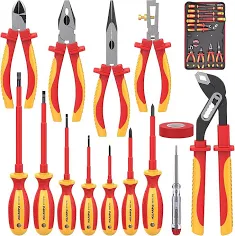
Electrical work requires more than technical knowledge and quality components. The tools used during installation, maintenance, and repair can also have a direct impact on safety. This is why insulated electrical tools are an important investment for electricians, technicians, contractors, maintenance teams, and homeowners who undertake suitable electrical tasks.
Pliers and screwdrivers are among the most frequently used tools when working with switches, sockets, terminals, distribution equipment, lighting systems, appliances, and electrical connections. However, ordinary hand tools should not automatically be considered suitable for electrical work simply because they have plastic or rubber handles. Tools specifically designed and tested for electrical applications provide an additional insulating barrier between the user and conductive parts.
That distinction matters because accidental contact with an energized conductor can cause electric shock, burns, equipment damage, electrical fires, or potentially fatal injuries.
The safest approach is always to de-energize the circuit before beginning work, verify that power has been isolated, and use appropriate procedures and protective equipment. Insulated tools are an additional layer of protection, not a replacement for electrical isolation or professional competence.
For anyone building an electrical toolkit, understanding how insulated pliers and screwdrivers work, how to identify quality products, and how to maintain them is essential.
Why Insulated Electrical Tools Are Important
Insulated electrical tools are designed to provide a protective insulating barrier around the parts of a hand tool that the user holds or may accidentally contact. They can reduce electrical risk when used correctly and within their specified ratings.
Electricity presents a unique danger because it cannot always be seen or heard. A circuit may appear harmless while still carrying dangerous voltage.
During electrical work, a screwdriver or pair of pliers can come close to live terminals, conductors, busbars, connectors, and other conductive components. A momentary mistake can create an electrical path through the body.
Insulation on an appropriate electrical tool helps create physical separation between the user’s hand and conductive sections.
This is particularly valuable when working in confined spaces where there is limited room for movement.
However, insulation should never encourage someone to work unnecessarily on energized circuits. The preferred method is to disconnect the supply, isolate it from accidental reconnection, and verify the absence of voltage before touching electrical components.
When these practices are combined with suitable insulated electrical tools, the overall level of protection is significantly improved.
What Makes a Tool an Insulated Electrical Tool?
A tool should not be considered electrically insulated merely because it has a plastic-colored handle. Genuine electrical tools are manufactured with insulation specifically intended for defined applications and conditions.
This is one of the most important distinctions buyers should understand.
A standard screwdriver may have a plastic handle designed primarily for comfort and grip. That does not necessarily mean that its insulation has been engineered or tested to protect someone working around electrical conductors.
A purpose-designed insulated electrical screwdriver has insulation incorporated into its construction to provide a defined protective barrier.
The same applies to pliers.
When selecting tools, look for:
- Manufacturer identification
- Applicable safety standards
- Voltage or insulation ratings where specified
- Clear product markings
- Certification information
- Appropriate construction
- An undamaged insulating surface
- A design intended for the electrical application
If certification or rating information is unclear, ask the supplier for product documentation rather than making assumptions.
A reputable supplier should be able to distinguish ordinary hand tools from tools specifically designed for electrical applications.
Why Certified Insulated Pliers Are Essential
Certified insulated pliers provide the gripping and cutting functions electricians need while incorporating insulation intended to reduce accidental electrical contact. Their protective value depends on proper certification, correct use, and good condition.
Pliers are essential for many electrical tasks.
An electrician may use them to hold conductors, bend wires, cut suitable cables, position components, or work in spaces where fingers cannot easily reach.
Common types include:
- Combination pliers
- Long-nose pliers
- Diagonal cutters
- Side-cutting pliers
- Lineman’s pliers
- Specialized electrical cutters
Each design has a particular purpose.
Combination pliers are useful for general gripping and cutting.
Long-nose pliers are particularly useful when working inside confined electrical boxes.
Diagonal cutters are designed for cutting appropriate conductors and wires.
However, the fact that a pair of pliers has insulated handles does not automatically make it suitable for every electrical application. The tool should have the appropriate markings and certification for the intended work.
The insulation should also be inspected regularly.
If the protective coating is cracked, cut, burned, loose, or otherwise damaged, the tool should be removed from service.
Why Insulated Screwdrivers Matter
Insulated screwdrivers provide additional protection because their metal working shafts often operate directly beside electrical terminals and conductive components. The correct screwdriver also reduces slipping and accidental contact.
Screwdrivers are used extensively during electrical installation and maintenance.
They are needed to tighten or loosen terminal screws, install sockets, mount switches, secure electrical components, and perform maintenance on equipment.
Because the screwdriver tip must contact a metal fastener, it can easily come close to energized components.
A suitable insulated screwdriver creates a protective barrier between the conductive shaft and the user’s hand.
Common screwdriver profiles include:
- Flat-head
- Phillips
- Pozidriv
- Torx
- Terminal screwdrivers
- Precision screwdrivers for appropriate applications
The correct profile and size are important.
A screwdriver that does not fit the fastener properly can slip. A sudden slip can cause the hand to move toward another conductive component, damage the terminal, or injure the user.
Therefore, electrical safety involves both insulation and tool control.
Insulated Tools Are Not a Substitute for Switching Off Power
Even the highest-quality insulated tool should not be treated as permission to work on a live electrical circuit. De-energizing and verifying the circuit should remain the first line of protection.
This principle cannot be overstated.
Some users believe that purchasing insulated screwdrivers and pliers makes live electrical work safe.
It does not.
The insulation provides an additional barrier against accidental contact, but it does not eliminate the hazards associated with energized electrical systems.
Before starting work, the appropriate process should normally include:
- Identify the circuit or equipment.
- Switch off the appropriate electrical supply.
- Isolate the circuit to prevent accidental re-energization.
- Verify that the circuit is actually de-energized.
- Use appropriate tools and protective equipment.
- Complete the work using safe electrical procedures.
- Inspect the completed work before restoring power.
For complex installations, unfamiliar systems, distribution boards, or work outside your competence, use a qualified electrician.
How to Identify Quality Insulated Pliers
Quality insulated pliers should have clear manufacturer information, appropriate electrical markings, durable construction, and insulation that remains intact throughout the tool’s working life.
When shopping for electrical tools, do not select pliers solely because they have brightly colored handles.
Instead, examine the product carefully.
Look for clear information regarding the tool’s intended application and insulation rating.
The handles should feel secure rather than loose.
The jaws should align correctly.
The cutting edges should be clean and properly formed.
The insulation should not show:
- Cuts
- Cracks
- Burns
- Peeling
- Exposed metal
- Chemical damage
- Unusual swelling
- Separation from the tool body
A new tool should also have identifiable manufacturer and specification information.
If a product is advertised simply as “insulated” without meaningful technical information, ask questions before purchasing.
How to Choose Insulated Screwdrivers
The best insulated screwdriver is one that combines appropriate electrical insulation with the correct tip, size, construction, and ergonomic design for the task.
Electrical work rarely requires only one screwdriver.
A professional electrician may need multiple sizes and profiles because different sockets, switches, terminals, control equipment, and appliances use different fasteners.
When choosing an insulated screwdriver, consider:
Tip profile
The tip must match the fastener.
Tip size
A properly sized tip provides better contact and reduces slipping.
Shaft insulation
The insulated section should be specifically designed for electrical applications.
Handle design
A comfortable grip improves control during repetitive work.
Manufacturer information
Clear product specifications make it easier to establish whether the tool is suitable for the intended application.
Condition
Never use a screwdriver with damaged insulation.
The right combination of insulation and mechanical performance gives the user better control and an additional layer of protection.
Why Certification Should Influence Your Buying Decision
Certification and standards information provide more meaningful evidence of electrical-tool suitability than appearance alone. Buyers should look for recognized markings and documentation appropriate to the intended application.
The word “certified” should not simply be treated as a marketing term.
Electrical hand tools can be manufactured according to recognized standards that specify requirements for insulation, mechanical performance, testing, and other characteristics.
The exact standard applicable to a particular tool depends on its design and intended use.
This means consumers should check the actual manufacturer’s information.
A knowledgeable supplier should be able to explain the specifications of the tool being purchased.
This is especially important for professionals who depend on their tools every day.
For an electrician, a properly specified tool is part of the working equipment and should be treated with the same seriousness as other safety-related equipment.
Inspect Your Tools Before Every Important Job
Even a certified tool can become unsafe if its insulation has been damaged. Inspecting electrical hand tools before use is one of the simplest ways to identify problems before they become accidents.
Tool inspection does not need to be complicated.
Before using insulated pliers, check the handles and insulating material.
Before using an insulated screwdriver, inspect the handle and insulated shaft.
Look for obvious damage such as cuts, cracks, burns, exposed metal, loose components, and severe wear.
Also consider how the tool has been used previously.
A screwdriver that has been used as a chisel or pry bar may have suffered damage beyond the visible tip.
Pliers that have been used to cut materials outside their intended capacity may have damaged jaws or cutting edges.
If you are uncertain about a tool’s condition, do not use it for electrical work.
Replacing a damaged hand tool is a small expense compared with the consequences of an electrical accident.
Never Repair Damaged Insulation With Tape
Damaged insulation should not be treated as fully restored simply by wrapping it in electrical tape. A compromised insulated tool should be removed from service and replaced or assessed according to the manufacturer’s approved procedure.
Electrical tape has useful applications in electrical work, but it should not be considered an equivalent replacement for factory-engineered tool insulation.
A certified insulated tool has been manufactured as an integrated product.
If the insulating layer becomes damaged, its original tested properties may no longer apply.
For this reason, avoid improvising repairs.
If the tool has exposed metal or serious damage, replace it.
Professional electrical teams should also have procedures for removing damaged safety-related tools from circulation.
The Importance of the Correct Tool for the Job
Using the correct tool improves control, reduces accidental slipping, and prevents damage to electrical components. Tool selection is therefore both a workmanship issue and a safety issue.
A pair of pliers should not be used as a substitute for a screwdriver.
A screwdriver should not be used as a chisel.
A standard cutting tool should not be forced through material beyond its rated capacity.
Electrical components can be delicate, and excessive force can damage terminals, conductors, insulation, and fasteners.
For larger installation projects, electricians may also need drills and other equipment. You can explore our power tools when additional equipment is required for construction, installation, or maintenance work.
Having the right equipment available reduces the temptation to improvise.
Electrical Safety Requires a Complete System
No single tool can eliminate electrical hazards. Effective protection comes from combining circuit isolation, testing, suitable tools, protective equipment, competent installation, and proper maintenance.
Insulated hand tools are one part of this system.
A professional electrical toolkit may also include:
- Voltage testers
- Multimeters
- Wire strippers
- Cable cutters
- Crimping tools
- Cable preparation tools
- Appropriate personal protective equipment
- Lockout or isolation equipment where required
The exact equipment depends on the nature of the work.
Electrical components must also be suitable for their intended application.
When sourcing electrical installation materials, you can browse our electrical fittings for products used in different construction and maintenance applications.
The important point is that good tools cannot compensate for poor installation practices.
Protecting Yourself From Accidental Electrical Contact
The purpose of insulated tools is to create an additional physical barrier that can reduce the chance of accidental electrical contact under the tool’s specified conditions.
Imagine an electrician tightening a terminal screw inside an electrical enclosure.
The screwdriver tip contacts the screw while the user’s hand remains on the insulated handle.
If the shaft accidentally touches another conductive point, the insulation can provide additional separation between the user’s hand and the conductive section.
Without appropriate insulation, the conductive shaft may extend much closer to the user’s hand.
This does not mean the tool makes the situation safe.
Instead, it demonstrates why insulation is an important component of a layered safety approach.
The user still needs to isolate the circuit whenever possible.
Why Handle Design Matters
Good ergonomic design improves control and reduces hand fatigue, which can help prevent accidental slips during electrical work. Safety and usability should therefore be considered together.
Electricians often use screwdrivers and pliers repeatedly throughout a working day.
A tool with a comfortable, secure grip can make precise work easier.
Poor grip design can become particularly problematic when the user’s hands are wet, oily, dusty, or fatigued.
The tool should therefore provide secure handling without encouraging excessive force.
The insulation should remain firmly integrated with the handle.
For professional applications, durability and ergonomics can be just as important as the initial purchase price.
Storing Insulated Electrical Tools Correctly
Correct storage helps preserve insulation and mechanical components. Tools should be protected from excessive heat, sharp objects, chemicals, moisture, and unnecessary mechanical impact.
A good toolbox should keep electrical tools organized.
Avoid throwing pliers and screwdrivers into a container where sharp metal edges repeatedly scrape against insulated surfaces.
Tools should also be protected from substances that could degrade their insulation.
If you operate a workshop, consider separating electrical hand tools from chemicals, solvents, and other materials that could cause deterioration.
Maintaining a clean workspace is also important. Appropriate cleaning supplies can help keep work areas organized during construction and maintenance activities.
A well-maintained toolbox makes it easier to identify damaged equipment before it is used.
When Should Insulated Tools Be Replaced?
Insulated tools should be removed from service when their insulation or mechanical components show significant damage, when required markings become unreliable, or when the manufacturer specifies replacement or inspection.
Do not wait until the tool breaks completely.
Replace or professionally assess tools showing:
- Exposed metal
- Cracked insulation
- Deep scratches
- Burn marks
- Loose handles
- Bent jaws
- Damaged cutting edges
- Severely worn screwdriver tips
- Chemical deterioration
- Other signs of compromised protection
Professional electricians should consider periodic tool inspections as part of their broader safety procedures.
A tool that looks usable mechanically may still be unsuitable if its insulation has been compromised.
The Difference Between General-Purpose and Electrical Tools
General-purpose hand tools and electrical hand tools may look similar, but they are not necessarily designed or tested for the same conditions. Electrical work requires tools specifically appropriate to the hazards involved.
This distinction is particularly important when purchasing tools for a new electrical toolkit.
A homeowner may see two screwdrivers with similar shapes and assume they provide the same protection.
They may not.
One could be a general-purpose screwdriver with a conventional handle.
The other could be a purpose-designed insulated electrical screwdriver with documented specifications.
The difference may not be obvious from a photograph.
This is why purchasing from a supplier that understands electrical products can be valuable.
Ask about the intended use, insulation rating, manufacturer information, and relevant certification before buying.
Insulated Tools for Professional Electricians
Professional electricians should treat insulated hand tools as essential working equipment rather than optional accessories. A well-selected tool set improves safety, control, efficiency, and consistency.
A professional toolkit may contain several types of insulated screwdrivers and pliers.
The exact combination depends on the electrician’s specialization.
Domestic installation work may require one set of tools, while industrial maintenance may demand another.
The key is to avoid relying on one universal tool.
For example, a long-nose plier may be ideal for reaching into a tight enclosure but unsuitable for cutting a conductor that requires a dedicated cutter.
Similarly, a large screwdriver may not provide appropriate control for a small terminal.
Tool specialization improves workmanship.
Insulated Tools and DIY Electrical Work
Homeowners should understand the limits of DIY electrical work even when they own quality insulated tools. Electrical systems can be hazardous, and unfamiliar or complex work should be left to qualified professionals.
Buying a set of insulated screwdrivers does not automatically make someone qualified to perform electrical installations.
Before attempting any electrical task, consider whether you understand the circuit, the equipment, the required isolation procedure, and the risks involved.
Simple maintenance tasks may differ significantly from installing new circuits, modifying distribution boards, or troubleshooting complex faults.
When in doubt, involve a qualified electrician.
Safety should always take priority over saving the cost of professional assistance.
Combining Electrical Tools With Other Construction Supplies
Electrical projects often overlap with plumbing, fastening, drilling, finishing, and general construction. Choosing compatible materials and tools across the project helps improve the quality of the finished installation.
For example, a renovation may involve installing electrical fittings while also replacing plumbing, repairing walls, installing glass, and repainting surfaces.
Different stages require different products.
Ngong Hills Merchants provides access to several construction-related categories, including plumbing supplies, adhesives, and glass accessories.
For projects involving new fittings and fixtures, appropriate fasteners may also be required. You can browse bolts and nuts for suitable fastening requirements.
Planning the full material list before beginning work can reduce delays and unnecessary purchases.
Cost Versus Safety When Buying Electrical Tools
The cheapest electrical tool is not necessarily the best value. Buyers should consider certification, durability, usability, safety specifications, and expected service life alongside the purchase price.
A low-cost tool may appear attractive when building a toolkit.
But if the insulation deteriorates quickly, the screwdriver tip wears prematurely, or the plier jaws become misaligned, the initial saving may disappear.
Quality tools can also improve productivity.
A screwdriver that fits correctly and provides good grip can make terminal work faster.
Well-made pliers can provide cleaner cuts and more controlled gripping.
For professional users, the time saved over hundreds of jobs can be significant.
The right purchasing decision therefore considers the total value of the tool rather than simply the price on the shelf.
Electrical Tool Maintenance
Proper maintenance extends tool life and helps keep electrical tools in a condition suitable for their intended application. Regular cleaning, inspection, correct storage, and timely replacement are essential.
After use, tools should be cleaned appropriately.
Do not expose insulated handles to chemicals that may damage the insulating material.
Store them in a dry, protected location.
Inspect them regularly.
Do not continue using tools simply because they still perform their mechanical function.
For electrical tools, insulation is part of the safety function.
A screwdriver that still turns screws but has damaged insulation should not be treated as fully serviceable.
A Practical Checklist for Buying Insulated Electrical Tools
Before purchasing insulated pliers or screwdrivers, verify their intended application, manufacturer information, insulation specifications, physical condition, and suitability for the work you plan to perform.
Consider the following:
- Is the tool specifically intended for electrical work?
- Is the manufacturer clearly identified?
- Are the relevant markings visible?
- Is the insulation intact?
- Does the screwdriver tip match the fasteners?
- Are the plier jaws appropriate for the material?
- Is the tool comfortable and secure to hold?
- Is the product suitable for the intended electrical environment?
- Can the supplier provide technical information?
- Does the tool meet the applicable requirements for the work?
Taking a few minutes to check these details can prevent a poor purchasing decision.
Why a Reliable Supplier Matters
A knowledgeable supplier can help customers select tools based on application rather than appearance or price. This is particularly valuable when purchasing specialized electrical safety equipment.
When you visit a reputable hardware supplier, ask specific questions.
A good supplier should understand the difference between:
- General-purpose tools
- Electrical hand tools
- Insulated tools
- Specialized professional tools
- Consumable accessories
- Electrical installation materials
The same principle applies when purchasing other construction products.
For example, selecting the correct paints requires understanding the surface, environment, finish, and intended use.
Likewise, electrical tools should be selected based on the electrical task and safety requirements.
Protect Your Investment and Your Safety
Good electrical tools protect more than your hands. They can also help protect expensive electrical components, reduce accidental damage, improve workmanship, and support safer working practices.
An electrician’s tools are part of the quality of the installation.
Poor tools can produce poor results.
A damaged screwdriver can strip a terminal.
Misaligned pliers can damage conductors.
A tool with compromised insulation can increase electrical risk.
Investing in properly specified tools therefore benefits both safety and workmanship.
For contractors, it also supports professionalism.
Clients expect electrical installations to be completed using appropriate equipment and safe working practices.
Final Thoughts on Insulated Electrical Tools
Insulated electrical tools are an essential part of responsible electrical work, but their protection depends on proper certification, condition, correct use, and safe working procedures.
Certified insulated pliers and screwdrivers should be considered important purchases for anyone whose work involves electrical components.
Do not choose them simply because they have colorful handles or rubber grips.
Look for proper manufacturer information and applicable certification.
Inspect the insulation before use.
Replace damaged tools.
Use the correct screwdriver or plier for the job.
Store tools carefully.
Most importantly, never rely on insulation as a substitute for switching off and verifying electrical circuits.
The safest approach is layered: isolate the electricity, verify the circuit is de-energized, use appropriate protective equipment, select the correct tools, and ensure that electrical work is performed by someone with the necessary knowledge and competence.
For electricians, contractors, maintenance teams, and serious DIY users, making quality insulated tools part of the standard toolkit is a practical investment in safer work.
When purchasing your next set of insulated electrical tools, take the time to examine the specifications rather than choosing based on price alone. The right tools can make electrical work more controlled, efficient, and responsible.
Your One-Stop Hardware Partner in Ngong
Imagine completing your project with the right tools, the best materials, and expert advice. At Ngong Hills Merchants, we turn your DIY or construction vision into reality with a complete selection of plumbing, electrical, glass, and sanitary ware.
Contact our team for a consultation and get the right supplies, right now.
QUALITY HARDWARE & SUPPLIES IN NGONG ✔ Complete Range of Plumbing & Electrical ✔ Power Tools, Adhesives & Paints ✔ Glass, Framing & Sanitary Ware ✔ Serving Kiserian, Ongata Rongai, Ngong Hills & beyond.
Request Your Free Consultation: Ngong Hills Merchants
Email: ngonghillsmerchants [at] gmail.com
Phone: +254 715974811
Visit Us: Ngong Township, Ngong, Kenya
Website: https://ngonghillsmerchants.com/